British Honey
Inside British Honey Harvesting: Secrets From Hive to Jar
British honey is known for its clean flavour, gentle floral sweetness, and rich natural aroma. But what makes the process behind British honey so special? In the UK, honey production follows a careful, natural method that respects the bees, the environment, and the purity of the final product.
In this in-depth guide, you’ll learn exactly how British honey is harvested—from the first spring flowers to the moment the jar is sealed. You’ll also see why local British producers, including Numidia Kingdom, follow traditional practices to keep every jar authentic, raw, and naturally delicious.
For a complete breakdown of British honey standards and market trends, read our full guide to British Honey UK.
The Importance of British Climate in Honey Production
British honey begins long before the first jar is bottled. The mild, wet UK climate shapes everything—from nectar production to how bees forage.
A Long Flowering Season
Unlike hot countries where flowers bloom quickly and fade fast, Britain enjoys:
- A slow, extended spring
- Long, mild summers
- Wildflowers that bloom at different times
This allows British bees to collect nectar from a wide range of plants, creating a complex, layered flavour.
Preparing the Hives for the British Honey Season
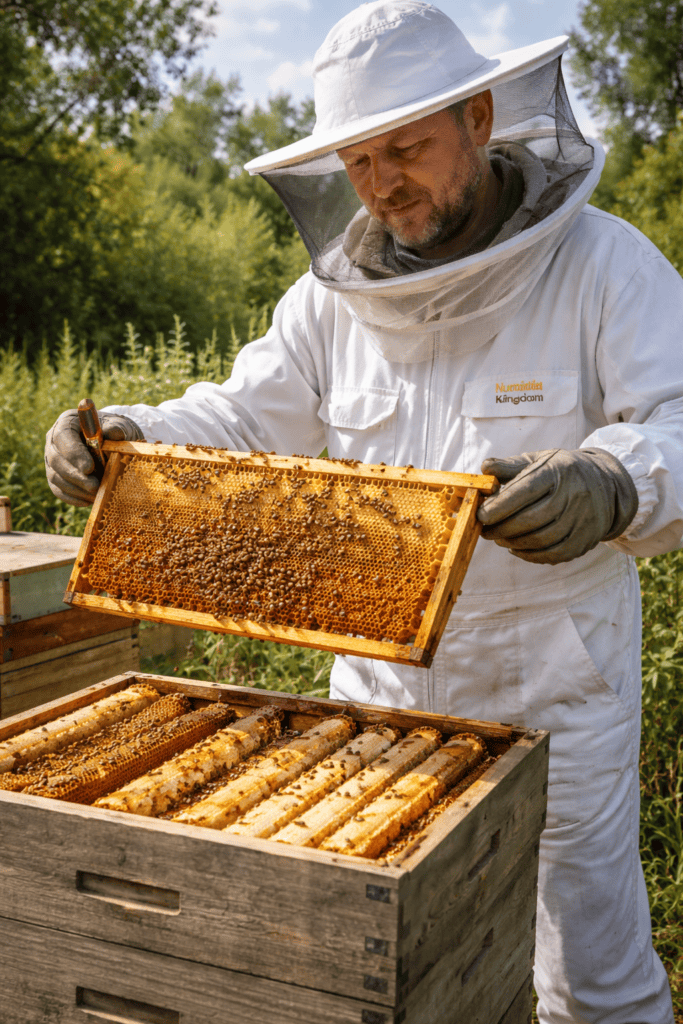
Before honey can be harvested, British beekeepers must ensure the hives are healthy and strong.
Hive Inspections
Beekeepers check:
- Colony strength
- Queen activity
- Brood patterns
- Food stores
- Presence of pests
Healthy hives produce better honey.
Adding Supers
When bees grow in number, the beekeeper adds “supers”—extra boxes where bees store nectar that becomes honey. This is the honey that humans later harvest.
How Bees Transform Nectar into British Honey
Nectar collection is where the magic begins.
The Foraging Journey
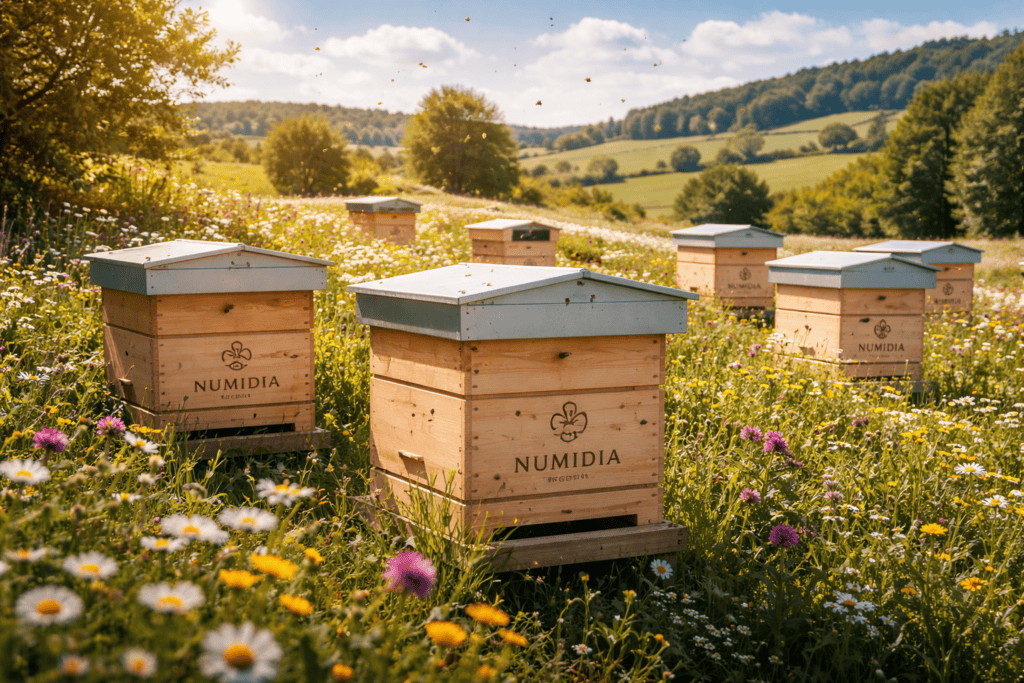
British bees forage from:
- Clover
- Willow
- Heather
- Blackberry
- Wildflower meadows
This wide range gives British honey its unique identity.
Nectar Becomes Honey
Inside the hive:
- Bees pass nectar from one to another
- Enzymes break down sugars
- Bees fan their wings to remove moisture
- The nectar thickens into honey
- Bees cap each cell with wax
This natural process ensures honey stays fresh naturally—without preservatives.
When Is British Honey Ready for Harvest?
Honey is only harvested when:
- The cells are fully capped
- Moisture content is below ~18%
- The honey is mature and stable
Harvesting early causes fermentation—something true British beekeepers avoid.
From Hive to Extraction Room
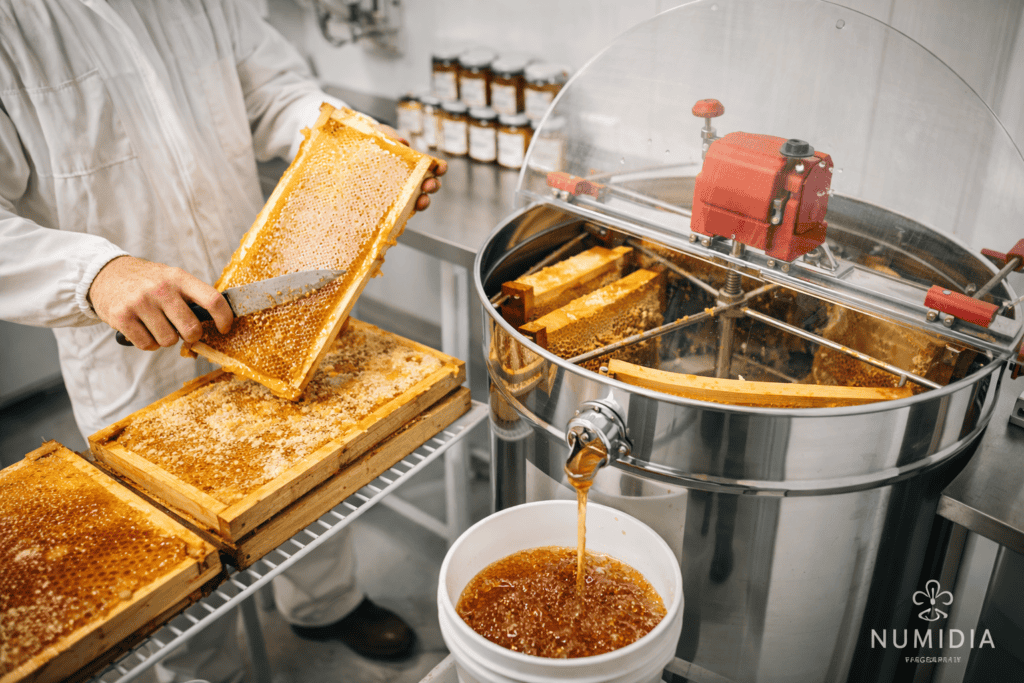
Once frames are full, they are removed and taken to a clean extraction facility.
Step 1: Uncapping the Honeycomb
The thin wax layer is removed using a knife or uncapping fork.
This exposes the honey-filled cells.
Step 2: Spinning the Honey
Frames are placed in an extractor—either manual or electric.
Centrifugal force spins the honey out of the comb without damaging it.
Step 3: Filtering (Light Only)
British honey is never ultra-filtered.
We only remove large bits of wax while keeping:
- Pollen
- Enzymes
- Natural goodness
This keeps our honey raw and authentic.
Settling, Jarring & Labelling
After extraction, honey rests for a few days to allow tiny bubbles to rise naturally.
Then it is:
- Jarred at room temperature
- Packed without pasteurisation
- Checked visually for clarity and crystallisation
- Labelled with full traceability
This ensures customers receive true British honey, not blends or processed honey.
Why British Honey Crystallises Naturally
British honey often crystallises faster because wildflowers contain high glucose levels.
This is not a defect—it is proof that the honey is:
- Pure
- Raw
- Not overheated
- Not blended with cheap syrups
Many customers actually prefer naturally crystallised honey for spreading.
Why Local British Honey Matters
Choosing locally produced British honey supports:
- Sustainable beekeeping
- Healthier bee populations
- UK biodiversity
- Lower carbon footprint
Numidia Kingdom is proud to produce honey in Lancashire, reflecting the rich wildflowers of our region.
- Try our British wildflower honey
- Discover our 500g wildflower honey jar
- Explore our 28g mini honey jars
- Visit our Home page
- Learn more About Us
- Contact us for wholesale here
- UK Honey Labelling Regulations —
https://www.gov.uk/food-labelling-and-honey-rules - British Beekeepers Association —
https://www.bbka.org.uk - National Honey Monitoring Scheme —
https://honey-monitoring.ac.uk - Food Standards Agency – Honey Safety —
https://www.food.gov.uk - European Honey Quality Guidelines —
https://food.ec.europa.eu - Codex Standard for Honey —
https://www.fao.org
Final Thoughts: British Honey The Way Nature Intended
From the first spring flowers to the final jar, British honey reflects nature, seasons, and traditional beekeeping.
Every jar from Numidia Kingdom carries:
- Purity
- Traceability
- Natural flavour
- Real care
When you choose local honey, you aren’t just buying sweetness—you’re supporting bees, biodiversity, and sustainable food production.
