Beekeeping
The Hidden Varroa Threat in the UK — And How to Protect Your Raw Honey
This complete guide explores Varroa biology, hive damage, detection methods, treatment strategies, and the role of retailers in protecting British raw honey. You will also learn how Varroa affects brood cycles, winter survival, honey quality, and colony development. The goal is to give UK beekeepers, local honey packers, and retailers a clear, practical strategy to safeguard bees and keep the raw honey market strong for future generations.
The UK local honey industry depends on strong, healthy bee colonies. Every jar of raw honey represents thousands of foraging flights, thousands of healthy workers, and a stable hive that can resist disease. However, one parasite—Varroa destructor—continues to threaten this balance. Varroa mites weaken bees, spread viruses, damage brood patterns, and reduce honey yields across the country. Because of this, both beekeepers and large local honey retailers must understand how Varroa affects hives and how strong management protects the entire raw honey supply chain.
See our comprehensive analysis of British Honey UK between 2026–2030.
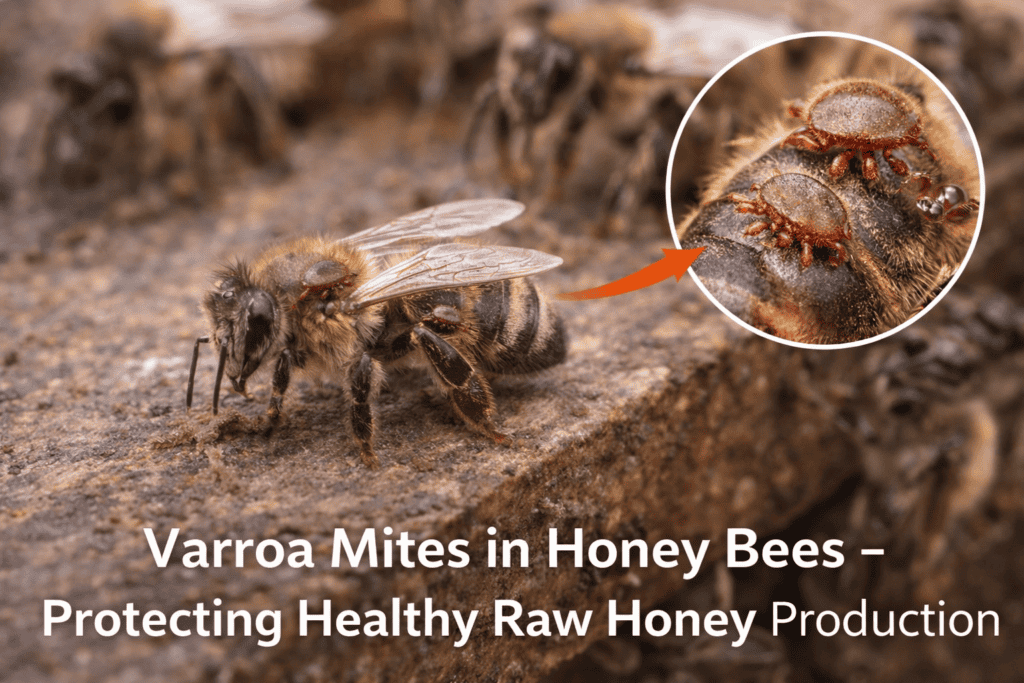
Understanding the Varroa Threat in the UK for British Honey and Raw Honey Production
Varroa mites remain the most destructive parasite affecting honeybees worldwide. These mites attach to bees, feed on their fat bodies, and carry multiple viruses. Although many pests exist in the hive environment, no other parasite causes more damage than Varroa.
How Varroa Spreads
Varroa spreads through:
- drifting bees
- robbing behaviour
- hive movements
- contaminated equipment
- unmanaged and feral colonies
Because of this, even well-managed apiaries face recurring reinfestation from surrounding sources.
Why Varroa Matters for Raw Honey
Strong colonies produce sweeter, cleaner, enzyme-richraw honey. Varroa damages the colony’s ability to produce nurse bees, foragers, and winter bees. This affects nectar collection, honey conversion, honey capping, and overall hive productivity.
When mite loads rise, honey seasons shrink, colony losses increase, and raw honey output drops significantly.
Numidia Wildflower Honey 500g – Pure British Local Honey
How Varroa Damages Bees and Reduces Hive Performance in British Honey and Raw Honey Production
Varroa causes several forms of damage, and each one affectsraw honey production differently. Understanding these mechanisms helps beekeepers take action early.
Varroa mites remain the most closely monitored parasite in the UK, and the National Bee Unit provides detailed scientific guidance on their biology and spread click here .
1. Direct Feeding Damage
Varroa mites feed on the bee’s fat bodies—a vital organ responsible for:
- immunity
- energy storage
- detoxification
- hormone production
- temperature regulation
When mites damage these tissues, bees lose strength, endurance, and resistance to disease.
2. Viral Transmission
Varroa carries and spreads more than twelve viruses. The most harmful include:
- Deformed Wing Virus (DWV)
- Acute Bee Paralysis Virus (ABPV)
- Sacbrood Virus (SBV)
- Chronic Bee Paralysis Virus (CBPV)
These viruses reduce flight ability, shorten lifespan, and damage brood.
Because viruses spread so quickly, colonies collapse even when honey stores appear strong.
3. Brood Damage and Reduced Population
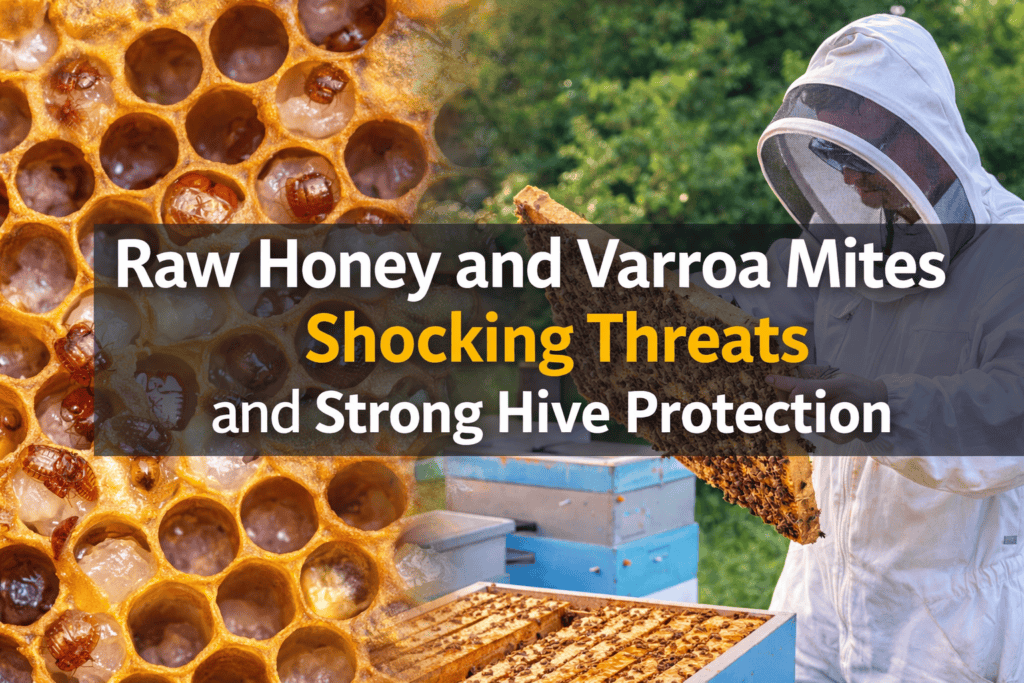
Varroa reproduces inside brood cells. As a result, brood emerges weak, underdeveloped, or deformed. Colonies begin to show:
- patchy brood patterns
- high levels of dead brood
- slow population growth
- reduced replacement of foragers
Without young bees, colonies cannot collect enough nectar to make raw honey.
According to Fera Science, Varroa mites weaken immunity and increase viral transmission inside the hive click here
4. Winter Losses
Healthy winter bees must survive 5–6 months. Varroa-infested bees survive only 2–3 months. Because of this, colonies often collapse late winter or early spring.
High winter losses reduce the number of hives entering the next honey season, which reduces UK raw honey availability.
How to Identify Varroa in Your Apiary
Early detection protects hives and ensures strong honey production. The most effective detection methods include:
1. Sugar Shake Test
A non-lethal method that dislodges mites from adult bees.
2. Alcohol Wash
Highly accurate because it removes nearly all mites from sample bees.
3. Sticky Board Drops
Useful for monitoring natural mite fall and tracking treatment success.
4. Drone Brood Uncapping
Since Varroa prefers drone brood, uncapping reveals infestation levels quickly.
5. Visual Signs on Bees
- deformed wings
- crawling bees
- shiny, hairless thorax
- patchy brood patterns
Regular monitoring prevents sudden colony collapse and protects raw honey production.
The Food and Agriculture Organization (FAO) warns that unmanaged Varroa infestations can reduce honey production by more than 70% in severe cases click here.
How Varroa Reduces Raw Honey Supply
When colonies weaken, raw honey production suffers. Here’s how mite pressure reduces harvests:
1. Foragers Decline
Foraging bees collect nectar and bring it home. Varroa-infested bees cannot fly far, live shorter lives, and deliver less nectar.
2. Reduction in Nurse Bees
Nurse bees feed larvae with nutrient-rich jelly. When nurse numbers drop, brood development slows.
3. Lower Honey Conversion
Bees need strong metabolism to evaporate nectar into honey. Sick bees evaporate nectar slowly, delaying capping.
4. Delayed Honey Flow
Weaker colonies cannot take advantage of short nectar flows. In the UK, weather changes quickly, so timing matters.
5. Reduced Winter Honey Stores
If hives collapse over winter, beekeepers lose their strongest honey producers for next season.
This is why controlling Varroa remains essential for stable UK raw honey markets.
Beekeepers can compare their inspection findings with official British Beekeepers Association disease-identification resources click here.
How UK Beekeepers Can Control Varroa Effectively
Strong, consistent management saves colonies and increases honey yield. Every UK beekeeper needs a yearly plan with clear treatment timing.
Step 1: Monitor Varroa All Season
Monitoring keeps beekeepers informed and prevents sudden mite explosions.
Recommended frequency:
- every 2–3 weeks in spring
- every 1–2 weeks in summer
- before and after treatments
- before winter feeding
With regular monitoring, beekeepers catch problems early and protect raw honey output.
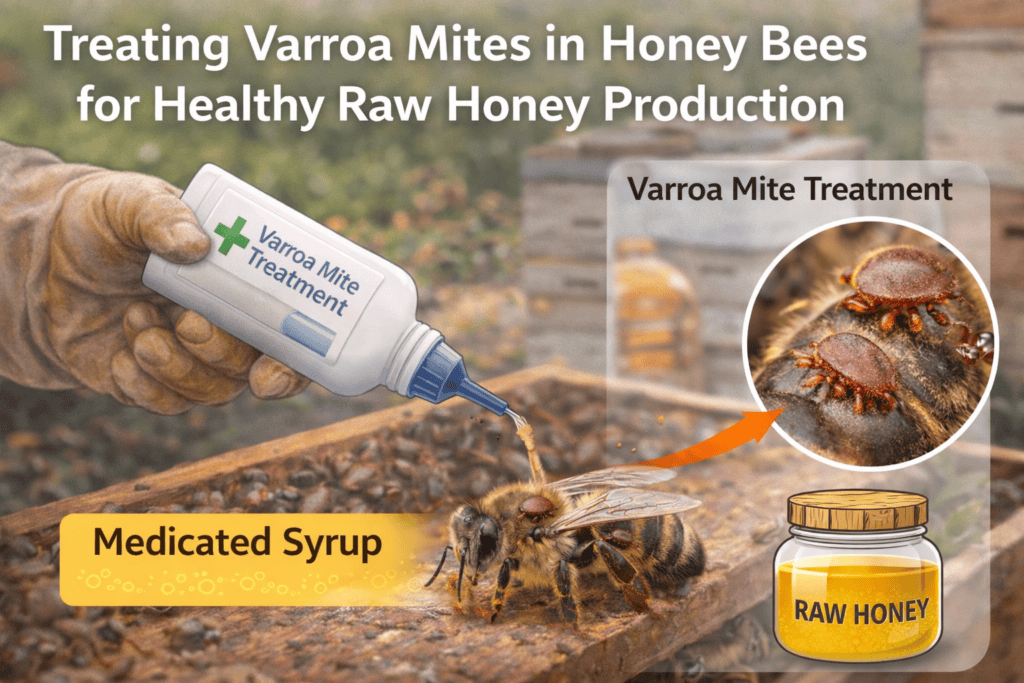
Step 2: Use Approved Varroa Treatments
UK-approved options include:
- Oxalic acid (vaporisation/trickle)
- Formic acid pads
- Thymol treatments (Apiguard, Thymovar)
- Amitraz strips (Apivar)
- MAQS
Rotating treatments prevents resistance and increases control success.
Correct application protects bees without affecting raw honey quality.
Step 3: Strengthen Hive Immunity
Healthy bees resist Varroa pressure more effectively. Here’s how to support immunity:
- requeen yearly for strong genetics
- feed during nectar gaps
- use pollen patties during poor weather
- prevent robbing
- choose hygienic bee lines (VSH)
Healthy colonies fill supers faster and produce richer raw honey.
Step 4: Replace Old Brood Frames Regularly
Old comb contains pesticides, viruses, and mite debris. Replacing 1/3 of brood comb each year drastically improves hive hygiene.
Clean brood frames boost bee health, reduce disease, and increase honey output.
Step 5: Reduce Hive Stress
Stress weakens colonies and increases Varroa impact. To protect bees:
- avoid excessive hive inspections
- provide shade in extreme heat
- add ventilation during humidity
- prevent overcrowding
- reduce vibrations and noise
Calm bees produce more brood and more honey.
Official UK recommendations for approved mite treatments appear in the GOV.UK Honey Bee Health regulations click here
The Role of Retailers in Supporting Raw Honey and Varroa Control
Large UK honey retailers influence beekeeping practices through sourcing standards. When retailers demand strong hive health, ethical treatment, and traceability, they help the entire industry.
Retailers strengthen raw honey supply when they:
- work with verified, disease-free suppliers
- request hive-health reports
- promote raw British honey benefits
- support local beekeepers
- reject blends that weaken market trust
- educate customers about bee health
Retailers who value raw honey help build a sustainable future for British agriculture.
Research from the Animal and Plant Health Agency (APHA) confirms that retailer-led standards significantly influence hive health across the UK click here
Raw Honey Quality in Varroa-Controlled Hives
When Varroa remains under control, bees produce superior raw honey with:
- enzyme-rich content
- clearer texture
- stronger floral notes
- authentic pollen profiles
- natural antioxidants
Customers choose raw honey because they want pure, unheated nutrition and genuine British flavour.
Why Local Raw Honey Is Popular in the UK
Local honey carries unique seasonal flavours and reflects the specific landscape where bees forage. This gives British honey:
- authentic taste
- full traceability
- stronger customer trust
- fewer food miles
- natural variation year to year
People want local honey because they feel connected to the land and the beekeeper who produced it.
How Children Understand Varroa and Raw Honey (Simple Version)
A family-friendly explanation:
- Bees collect nectar from flowers.
- Bees store it inside honeycomb.
- They fan their wings to dry the nectar.
- Varroa mites try to attack bees and weaken them.
- Beekeepers treat hives to protect bees.
- Healthy bees make healthy raw honey.
This helps children understand why caring for bees matters.
Varroa Mites and the Future of British Raw Honey
The future of UK raw honey relies on healthy bees. Without strong Varroa control:
- colonies collapse
- honey seasons shorten
- retail supply decreases
- prices rise
- pollination declines
However, with consistent monitoring, responsible retail policies, and strong beekeeper education, the UK can protect both bees and local honey production.
Healthy bees create strong honey flows, stable pollination, and long-term food security.
Conclusion
Varroa mites remain the biggest threat to bees, colonies, and the UK raw honey industry. Strong management, responsible retail support, and continuous monitoring protect bees and ensure a stable future for British beekeeping.
When we protect bees, we protect our crops, our environment, and the rich, natural flavour of raw British honey.he rich flavour of genuine raw honey.
Numidia Wildflower Honey 500g – Pure British Local Honey
