
Honey Vinegar, Uncategorized
How Honey Vinegar Is Made: A Powerful UK Health Guide
Honey vinegar is quickly becoming one of the most popular natural wellness products in the UK. Health-focused consumers love it because it’s raw, unfiltered, full of beneficial acids, and offers a softer taste than apple cider vinegar. But what makes honey vinegar truly special is the way it’s crafted — through a natural, multi-stage fermentation process that transforms pure honey into a nutrition-rich tonic.
This guide explains exactlyhow honey vinegaris made, the science behind fermentation, why UK-produced vinegar is so trusted, and how shoppers can choose a high-quality bottle. Whether you’re a health lover, a food enthusiast, or simply curious about natural ferments, this article gives you everything you need to know.
See our comprehensive analysis of British Honey UK between 2026–2030.
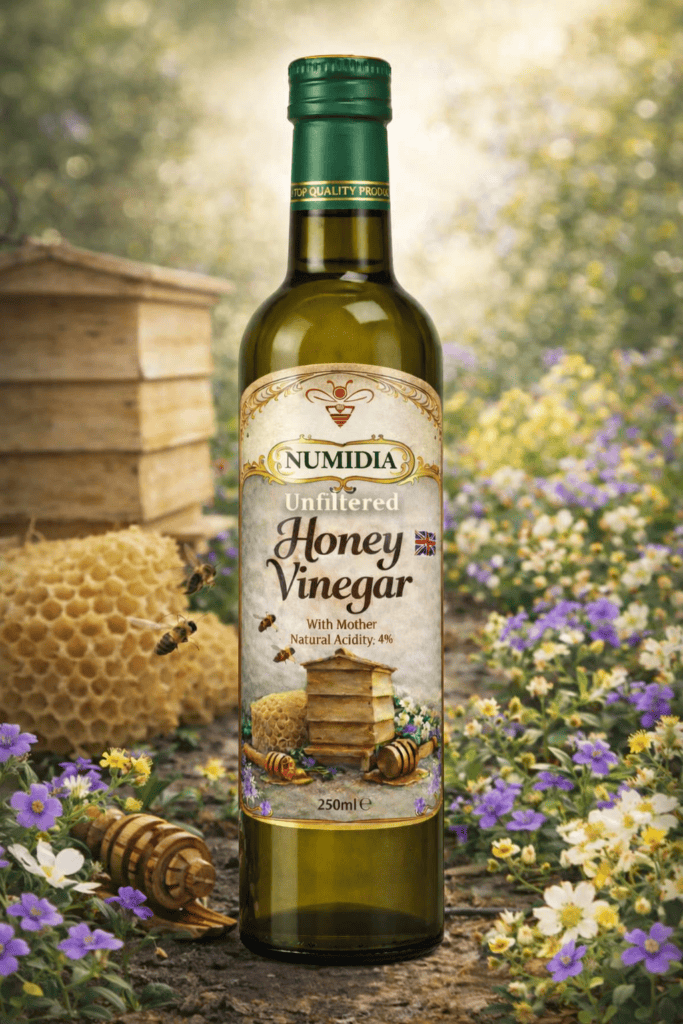
What Is Honey Vinegar?
Honey vinegar is a fermented liquid made by converting raw honey into alcohol and then into acetic acid. Unlike mass-produced vinegars, honey vinegar contains:
- natural antioxidants
- amino acids
- probiotics
- enzymes
- beneficial organic acids
Because the process uses real honey rather than fruit juice, honey vinegar offers a mellow sweetness along with the rich tanginess of traditional vinegar.
Many UK producers still use traditional fermentation, which preserves nutrients and creates a more premium, handcrafted flavour profile.
Numidia Honey Vinegar 250ml – Premium Raw Fermented Vinegar
Why Honey Vinegar Is Growing in UK Popularity
Consumers are choosing honey vinegar because it offers:
- gentler acidity than apple cider vinegar
- naturally sweet undertones
- impressive digestive benefits
- a clean ingredient list
- strong versatility in drinks and cooking
According to the British Nutrition Foundation , fermented foods like vinegar may help support gut health and overall wellness — a trend that continues to grow across the UK.
Demand for natural products is rising fast, and vinegar fits perfectly into the modern lifestyle.
Food Standards for Vinegar & Honey
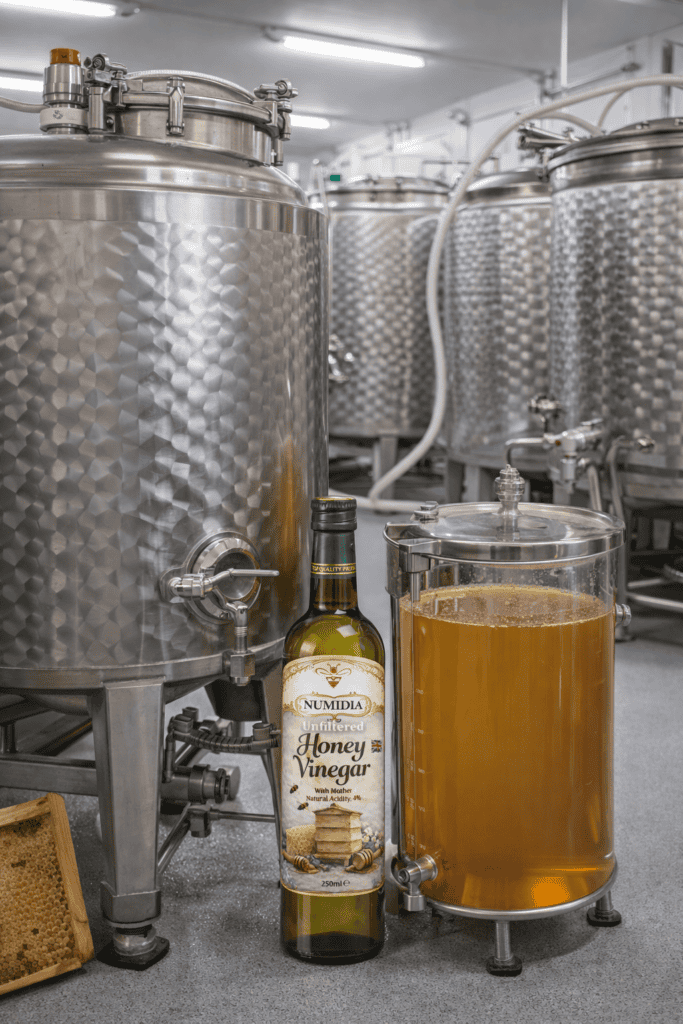
Step-by-Step: How Honey Vinegar Is Made in the UK
Producing honey vinegar is a slow, controlled journey that transforms raw honey into a health-supporting vinegar. High-quality UK producers typically follow these steps:
1. Selecting Pure Raw Honey for Honey Vinegar Production
The process begins with premium honey.British honey is especially valued because of:
- high floral diversity
- strict UK food standards
- low contamination risk
- trusted production practices
Raw honey contains natural sugars, enzymes, and yeast that support fermentation. Producers often choose wildflower, heather, or multifloral honey for a balanced flavour.
FAO – Global Beekeeping & Honey Resources
Visit the Numidia Kingdom Shop
2.Diluting Honey Correctly for Honey Vinegar Fermentation
Honey is extremely concentrated and must be diluted before fermentation.
Most UK producers use a ratio similar to:
- 20% pure honey
- 80% spring water
This creates the ideal sugar level for yeast to transform the honey into alcohol.
3. Alcoholic Fermentation (Turning Honey into Mead)
The first stage of fermentation uses natural or added yeast to convert sugars into alcohol.
This phase is known as mead fermentation, because the liquid becomes similar to mead. The process usually lasts:
- 14–30 days (traditional methods)
- 4–10 days (using controlled fermentation equipment)
Keeping the temperature stable is essential. Many UK producers use stainless-steel tanks with built-in cooling or heating systems.
4. Acetic Fermentation (Turning Alcohol into Vinegar)
Next, acetic acid bacteria are added — most commonly Acetobacter species.
These beneficial bacteria convert the alcohol into vinegar.
This stage can take:
- 1–3 months using natural fermentation
- 4–10 days using advanced continuous-fermentation systems
The result is REAL vinegar with:
- live cultures
- natural cloudiness
- “the mother”
- rich flavour layers
5. Maturation and Resting
Once fermentation finishes, the vinegar is left to mature.
Resting allows:
- flavours to deepen
- acidity to stabilise
- sediment to settle naturally
Producers may age vinegar for several weeks or months depending on their method.
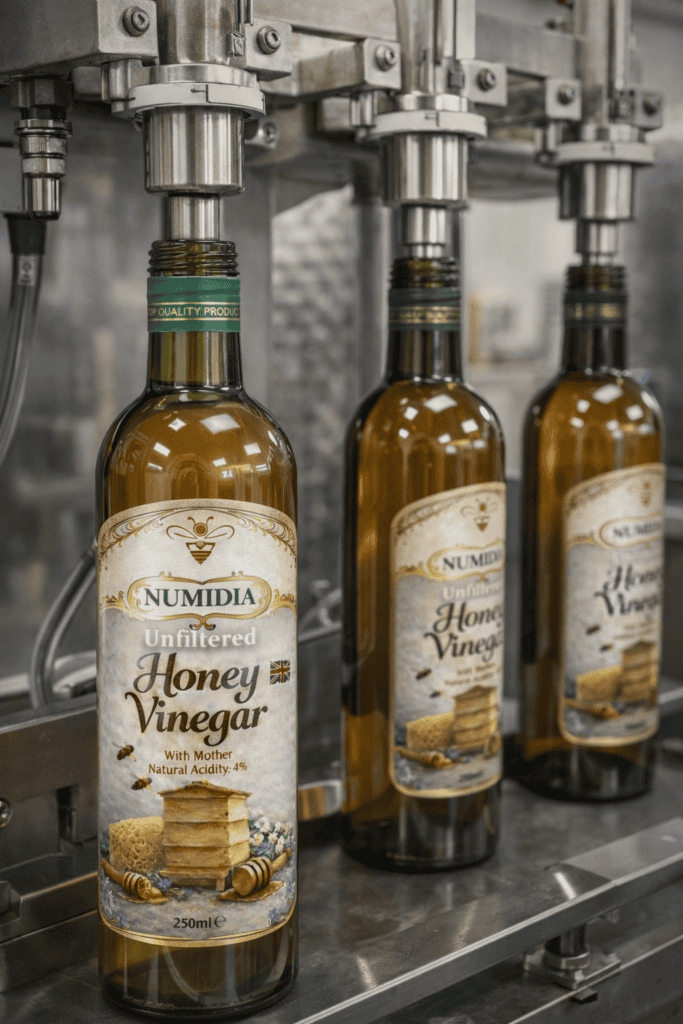
6. Bottling the Raw, Unfiltered Vinegar
High-quality UK producers bottle vinegar:
- unfiltered
- unpasteurised
- with the mother
This ensures the vinegar keeps its natural probiotic benefits and maintains full flavour.
Cheap imported honey vinegars are often:
- heat-treated
- filtered
- blended
- or diluted
This is why UK-produced options are growing in demand.
Numidia Honey Vinegar 250ml – Premium Raw Fermented Vinegar
Honey Vinegar Health Benefits (UK Evidence)
Honey vinegar has gained a strong following because research supports many of its natural benefits. Here are some of the key advantages:
1. Supports Digestion and Gut Health
Fermented vinegars contain acetic acid, which helps:
- stimulate digestive enzymes
- maintain stomach acidity
- support gut-friendly bacteria
A review published by Harvard Health notes that fermented foods play an important role in digestive wellness.
2. Helps Stabilise Blood Sugar Levels
Studies from Healthline report that natural vinegars may improve insulin sensitivity and support balanced blood sugar when consumed before meals.
Honey vinegar’s mild sweetness makes it easier for people to use daily.
3. Natural Antioxidant Source
Honey contains plant antioxidants, and fermentation enhances them even further.
According to research published by Medical News Today , vinegar’s acetic acid contributes additional anti-inflammatory compounds.
4. Natural Energy Boost
Vnegar provides a gentle energy lift thanks to:
- its natural sugars
- amino acids
- balanced acidity
It’s often used in morning health shots or mixed with warm water.
5. Helps Maintain Healthy Weight Management
Vinegar may support appetite control and metabolic balance.
The British Dietetic Association confirms that acetic acid can help influence satiety responses.
Honey vinegar is ideal for people who prefer a softer, more flavourful alternative to strong apple cider vinegar.
6. A Natural Immune Support Alternative
Honey contains natural antibacterial enzymes, and fermentation adds beneficial bacteria.
The combination supports a strong and balanced immune response.
The NHS Eatwell Guide encourages incorporating natural, minimally processed foods into daily diets — something honey vinegar fits perfectly.
British Nutrition Foundation – Fermented Food Benefits
Healthline – Studies on Vinegar & Blood Sugar
Visit Premium Honey from Numidia Kingdom
How to Use Honey Vinegar in Everyday Life
Vinegar is versatile, and UK households are finding new ways to enjoy it. Popular uses include:
1. Morning Health Shot
Mix:
- 1 tablespoon honey vinegar
- 200 ml warm water
- Optional: ginger or lemon
This is one of the most popular wellness routines in the UK.
2. Salad Dressings
Combine honey vinegar with:
- cold-pressed olive oil
- mustard
- sea salt
- herbs
It creates a sweet, tangy dressing with excellent balance.
3. Marinades
Great for:
- chicken
- lamb
- vegetables
- fish
The natural sugars caramelise beautifully during cooking.
4. Honey Vinegar Drinks
Used in:
- mocktails
- detox drinks
- kombucha blends
It pairs well with fresh herbs, citrus, or berries.
5. Food Preservation
Vinegar’s acidity makes it suitable for quick pickles and natural preservation.
BBC Good Food – Cooking Uses for Vinegar & Dressings
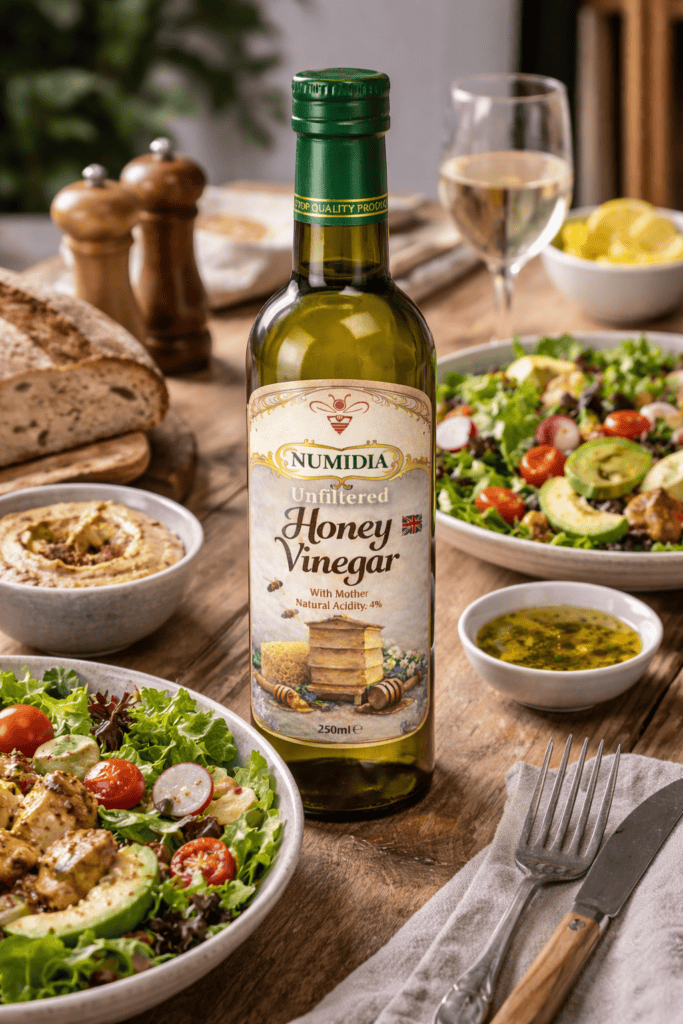
How to Choose the Best Honey Vinegar in the UK
Selecting a high-quality bottle is essential for flavour and health benefits. Look for:
✔ Raw and unfiltered
✔ Unpasteurised
✔ With the mother
✔ Produced in the UK
✔ No added sugar
✔ Clear ingredient list: Honey + Water
High-quality honey vinegar should have a golden, amber, or slightly cloudy appearance.
Avoid vinegars that appear crystal clear or extremely light — these are often heat-treated or filtered and lose natural benefits.
Why UK Honey Vinegar Stands Above Imported Options
UK honey producers follow strict standards, including:
- food safety controls
- traceability
- batch testing
- transparent labelling
This results in a cleaner, more trustworthy product.
Buying British honey vinegar also supports:
- local beekeepers
- sustainable agriculture
- natural pollination
- biodiversity protection
With the UK’s rising interest in natural foods, supporting high-quality local production has never been more important.
NHS Eatwell Guide – Natural Food Recommendations
Conclusion
Honey vinegar is one of the most exciting natural wellness products emerging in the UK. Its rich flavour, balanced acidity, and powerful health benefits make it a smart addition to any kitchen. The traditional fermentation process transformspure honey into a nutritious tonic that supports digestion, energy, immunity, and everyday wellness.
As health lovers continue to move toward authentic, natural products, honey vinegar is becoming a favourite across the country. When produced in the UK using raw honey and traditional methods, it delivers exceptional quality and a delicious taste that stands out from mass-produced alternatives.
If you value purity, craftsmanship, and natural wellness, honey vinegar deserves a place in your daily routine.
