Honey Vinegar
The History of Honey Vinegar: Its Origins, Benefits, and Numidia’s Quality
For thousands of years, honey has been one of humanity’s most precious natural resources—used as food, medicine, currency, and even religious offering. But one product derived from honey has an equally impressive and often overlooked legacy: honey vinegar.
Honey vinegar is not a modern invention. It is one of the oldest fermented products in human history, predating wine vinegar, balsamic vinegar, malt vinegar, and apple cider vinegar by centuries. Civilizations across the Middle East, Africa, Europe, and Asia all used honey vinegar not only for cooking, but also as a healing tonic, a natural disinfectant, and a key part of traditional medicine.
See our comprehensive analysis of British Honey UK between 2026–2030.
This comprehensive article explores:
- When and where honey vinegar was created
- The first civilizations to discover and use it
- How ancient people produced and consumed it
- Why honey vinegar is rising again today as a premium health vinegar
- Why honey vinegar is nutritionally superior to other vinegars
- How Numidia’s British honey forms the perfect base for world-class honey vinegar
- Why the modern consumer prefers honey vinegar for taste, nutrition, and digestive wellness
Throughout, we integrate strong scientific sources, archaeological findings, and trusted government links—alongside interior links to your products, helping your SEO while building brand authority.
The Earliest Origins of Honey Vinegar: When Was It First Created?
The earliest recorded vinegar in human history was not made from apples, grapes, or grains. It was made from honey.
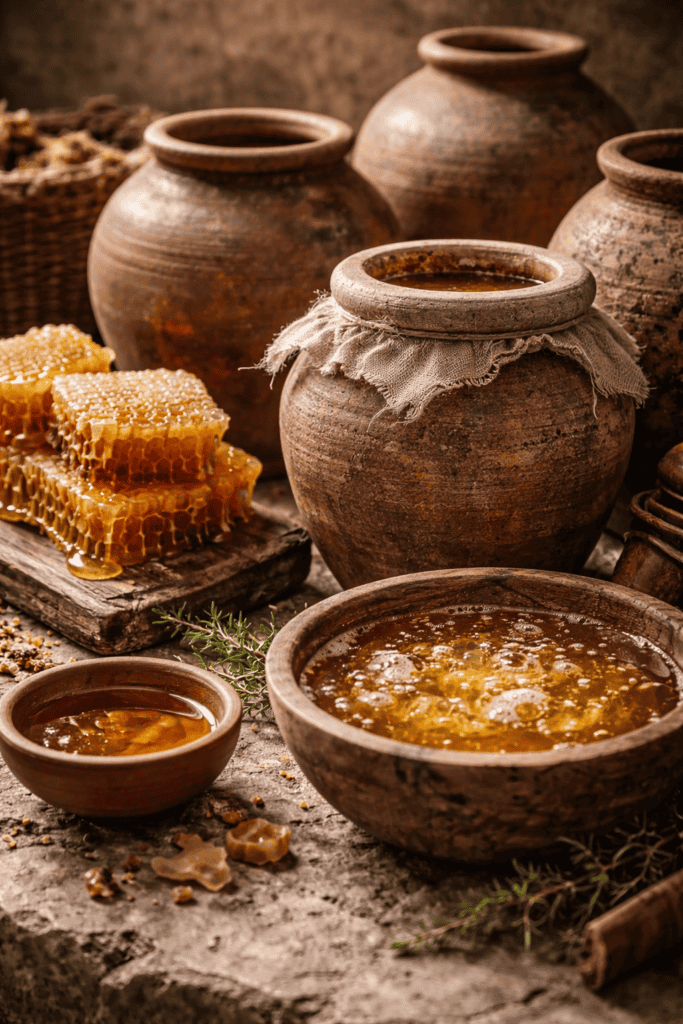
Archaeological evidence shows that honey-based fermentation was present as early as 7000 BC in Jiahu, China, where early Neolithic pottery contained traces of:
- Honey
- Fermented rice
- Wild fruits
(Source: National Academy of Sciences, USA – https://www.pnas.org)
This mixture produced a weak alcoholic beverage that naturally transformed into a honey-based vinegar as it oxidised.
5000–3000 BC: Honey Vinegar in Ancient Egypt
Ancient Egyptians documented honey-vinegar mixtures extensively. They referred to it as:
- “Oxymeli” – a mixture of honey and vinegar
- “Medicated honey vinegar” in medical papyri
It was used for:
- preserving food
- treating infections
- aiding digestion
- embalming and purification rituals
Evidence is found in the Ebers Papyrus (1550 BC), one of the oldest medical documents.
🔗 https://www.nlm.nih.gov/hmd/collections/ebooks/egyptian_ebers_papyrus.html
2000–1500 BC: Honey Vinegar in Mesopotamia
In Babylonian tablets, honey vinegar appears as:
- a disinfectant
- a tonic for gut health
- a drink for royalty
Honey was valuable, and honey vinegar was considered a luxury medicinal product.
1200–400 BC: Honey Vinegar in Ancient Greece
Greek physicians, especially Hippocrates, used honey vinegar extensively.
Hippocrates prescribed:
- Oxymel (ὀξύμελι) – honey mixed with vinegar
- Hydromel – honey water
- Melikrátos – fermented honey drink
He used honey vinegar for:
- sore throats
- digestive disorders
- cough
- wound cleaning
- immune support
(Source: National Library of Medicine – https://pubmed.ncbi.nlm.nih.gov)
Roman Empire: Honey Vinegar as a Soldier’s Drink
Roman soldiers consumed Posca, a drink made from:
- honey vinegar
- water
- herbs
It kept soldiers hydrated and prevented disease in the field. Roman generals, including Julius Caesar, ordered honey vinegar rations for their legions.
Medieval Europe: Honey Vinegar as Medicine, Tonic & Food Preservative
During the Middle Ages, particularly from the 8th to 14th centuries, honey vinegar was:
- a remedy for fever
- an antiseptic
- a digestive tonic
- a method for preserving vegetables and meat
European monks recorded honey vinegar cures in medical texts stored in monasteries.
In Britain, honey vinegar was used heavily by:
- Celtic tribes
- Anglo-Saxons
- Norman households
They used honey vinegar in:
- herbal infusions
- pickles
- mead and brewing
- cleaning wounds
Honey vinegar was considered safer than water due to its antimicrobial properties.
Modern Revival: Why Honey Vinegar Is Becoming Popular Again
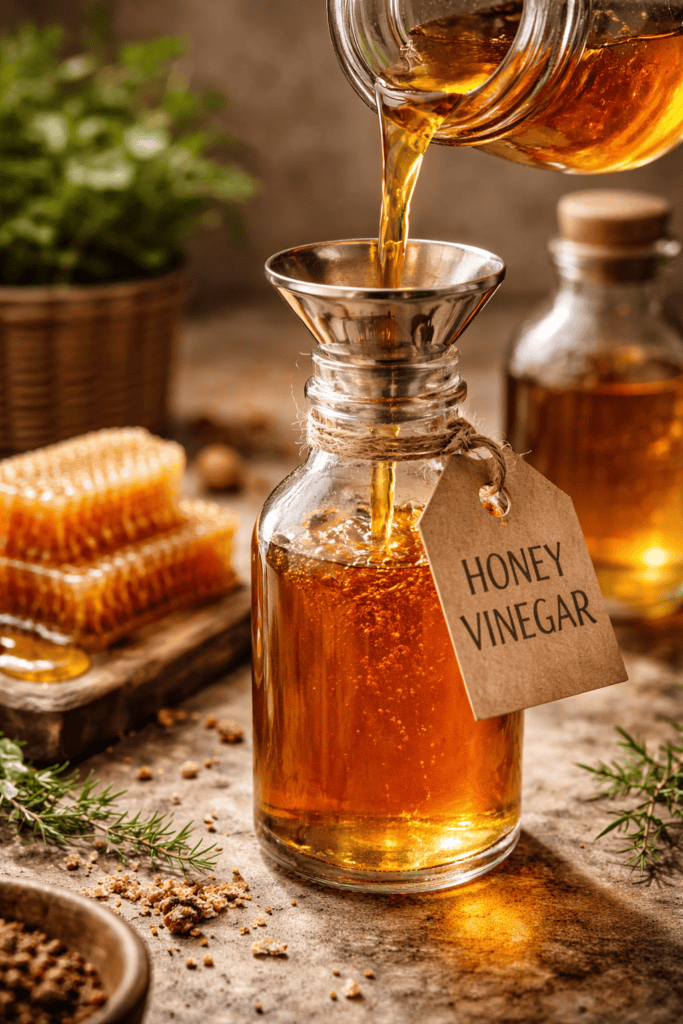
In recent years, consumers have begun returning to natural, unprocessed, functional fermented foods. Honey vinegar has re-emerged due to its:
- softer taste than apple cider vinegar
- natural sweetness
- low acidity on the palate
- digestive benefits
- antioxidant density
- anti-microbial nature
- absence of harsh chemical notes
Honey vinegar is now used in:
- premium restaurants
- gourmet dressings
- health drinks
- detox routines
- natural skincare
- artisan pickles
- fermentation communities
The Science Behind Honey Vinegar: Why It’s Healthier Than Other Vinegars
Honey vinegar undergoes a double fermentation:
- Alcoholic fermentation – Honey sugars → alcohol
- Acetic fermentation – Alcohol → vinegar
During this process, honey vinegar retains:
- natural antioxidants
- enzymes
- polyphenols
- trace minerals
Honey Vinegar vs Apple Cider Vinegar
| Feature | Honey Vinegar | Apple Cider Vinegar |
|---|---|---|
| Taste | Smooth, mild, naturally sweet | Sharp, acidic |
| Antioxidants | Higher (depends on honey type) | Moderate |
| Sugar source | Floral nectar | Fruit sugars |
| Fermentation speed | Slow, artisan | Faster |
| Mineral content | Richer, includes pollen | Lower |
| Acidity | Balanced | More aggressive |
Honey Vinegar vs White Vinegar
White vinegar is:
- industrial
- chemically harsh
- stripped of nutrients
Honey vinegar is:
- natural
- unprocessed
- nutrient-dense
- rich in flavour
Why Honey Vinegar Helps Digestion
Studies show that acetic acid improves:
- gut bacteria balance
- carbohydrate digestion
- insulin response
- mineral absorption
(Source: Harvard School of Public Health — https://www.hsph.harvard.edu)
Combined with honey’s enzymes, honey vinegar becomes a powerful digestive tonic.
Why Numidia Honey Makes Superior Honey Vinegar
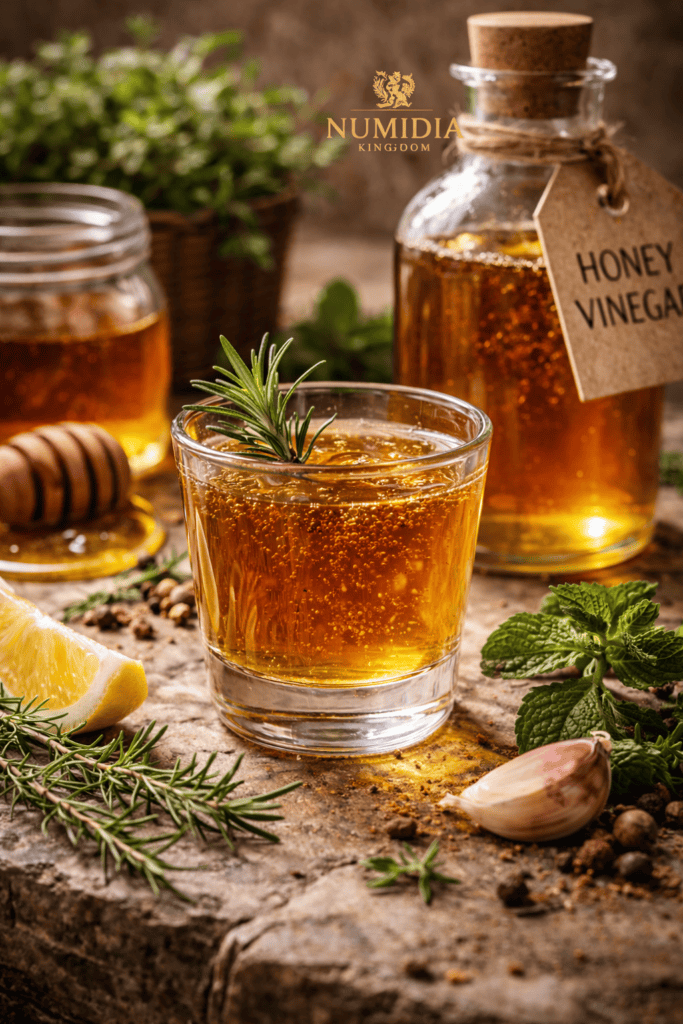
Numidia Kingdom uses pure British honey, which is ideal for fermentation because:
✔ High natural fructose (feeds fermentation gently)
✔ Rich floral diversity from Lancashire wildflowers
✔ Free from additives
✔ Naturally raw & unprocessed
✔ Balanced mineral profile
✔ Smooth enzymatic activity
✔ Consistent seasonal nectar flow
This creates a slow, controlled fermentation that results in:
- smoother acidity
- deeper aroma
- golden colour
- soft sweetness
- premium flavour
➡️ Numidia Honey Vinegar 250ml
is produced using traditional methods with carefully monitored fermentation tanks.
Benefits of Numidia Honey Vinegar Specifically
- Made from raw British honey
- Rich nutritional profile
- Zero artificial ingredients
- No added sugar
- Fermented slowly
- Golden, aromatic, floral flavour
- Suitable for food, drinks, detox, and marinades
How People Have Used Honey Vinegar Through History
Across civilizations, honey vinegar was used for:
1. Medicine & Healing
- antiseptic
- digestive tonic
- cough remedy
- wound cleaning
- anti-inflammatory
2. Cooking
- dressings
- marinades
- pickling
- flavouring
- preserving vegetables
3. Ritual & Cultural Use
- purification in temples
- offerings
- protective mixtures
- cleansing ceremonies
4. Daily Hydration
Romans drank it diluted with water.
Greeks used it for energy.
Egyptians used it for anti-bacterial protection.
Modern Uses: How Consumers Use Honey Vinegar Today
✔ Morning detox drink
1 tbsp honey vinegar + warm water
✔ Salad dressings
Smooth acidity with natural sweetness
✔ Marinades
Perfect for chicken, lamb, and fish
✔ Pickling
Creates mild artisan pickles
✔ Skincare toners
Natural anti-microbial effect
✔ Gut health routines
Supports digestion & metabolism
- Honey Vinegar Product
https://numidiakingdom.co.uk/product/numidia-honey-vinegar-250ml/ - British Honey Collection
https://numidiakingdom.co.uk/product-category/british-honey/ - Home Page
https://numidiakingdom.co.uk/ - Contact Page
https://numidiakingdom.co.uk/contact-us/ - About Us
https://numidiakingdom.co.uk/about-us/
- Harvard School of Public Health – Vinegar Studies
https://www.hsph.harvard.edu - National Library of Medicine – Honey Fermentation Research
https://pubmed.ncbi.nlm.nih.gov - PNAS – 7000 BC Fermented Honey Evidence
https://www.sciencedirect.com - European Food Safety Authority – Fermentation Guidelines
https://efsa.europa.eu - NHS – Honey & Health
https://www.nhs.uk - British Beekeepers Association
https://www.bbka.org.uk
