loca honey, Uncategorized
Why Local Honey Is Better for Taste, Quality, and Health
Local honey has become one of the most trusted natural foods in the UK, valued for its purity, taste, and the way it connects consumers with real beekeepers. Unlike imported or heavily processed honey, british honey retains its natural enzymes, fragrance, and character because it comes directly from nearby hives. It reflects the flowers, climate, and landscape of your region, offering a unique flavour profile that cannot be reproduced in industrial honey.
In this article, we explore why local honey matters, how it is produced, and why chefs, nutritionists, and families prefer it for daily use.
Learn more about regulations and production standards in our completeo British Honey UK report
1. What Makes Local Honey Different?
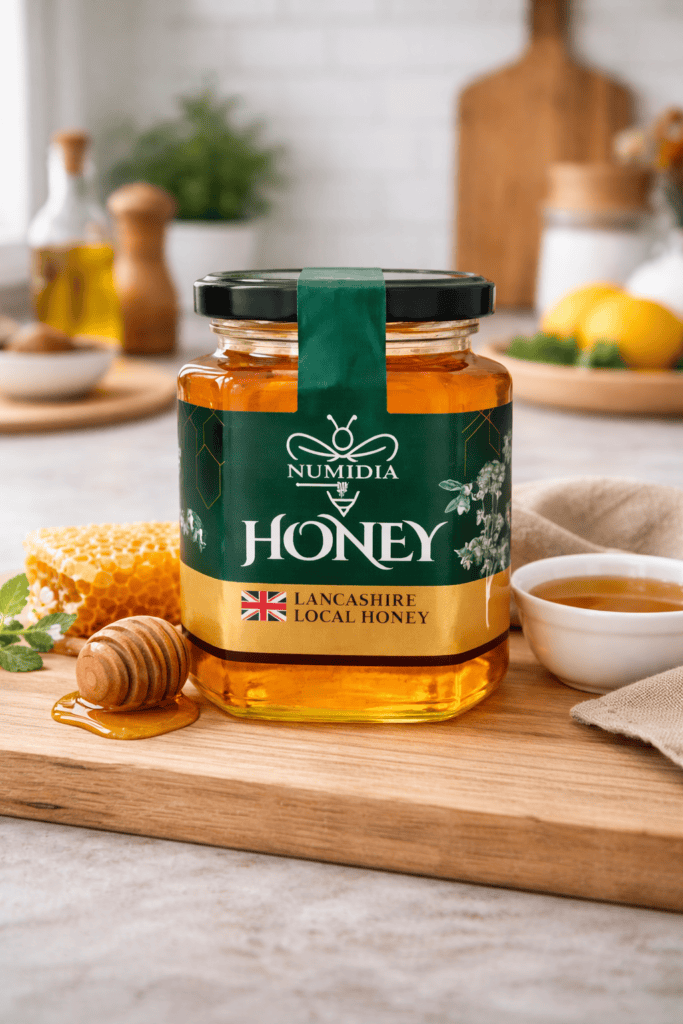
Local Pure honey is produced by beekeepers within your region, using nectar gathered from local wildflowers, orchards, hedges, and fields. Because it travels a shorter distance and undergoes less processing, it maintains a higher level of freshness.
Most commercial honey found in supermarkets is blended, ultrafiltered, or pasteurised to achieve uniform taste and appearance. This process removes pollen, enzymes, antioxidants, and many natural nutrients. Local British honey, on the other hand, stays closer to its original form. It remains raw, unheated, and full of character.
The flavour of local British honey reflects the season and the plants surrounding the hive. For example, honey produced in Lancashire may carry notes of clover, bramble, wildflower nectar, and occasional hints of lime or willow. These subtle changes make each batch unique.
2. How Local Honey Is Made: From Hive to Jar
The journey of local honey begins inside the hive, where bees collect nectar from flowers. They store the nectar in honeycomb cells and reduce the moisture content by fanning their wings. When the honey reaches the correct consistency, the bees seal each cell with a thin layer of wax.
Beekeepers harvest the frames once the honeycomb is capped. The honey is then extracted using a manual or electric extractor. After extraction, it is strained—never overheated—to remove large wax particles while keeping enzymes, pollen, and natural nutrients intact.
Because local producers work in small batches, the handling is gentle, controlled, and focused on quality rather than mass production. Every jar represents careful beekeeping, seasonal conditions, and respect for the bees.
Learn more about our Local Lancashire Honey 500g, crafted from pure British nectar:
https://numidiakingdom.co.uk/product/numidia-wildflower-honey-500g/
3. Health Benefits of Local Honey
Local British honey is more than a sweetener. Its natural composition makes it a valuable part of a balanced diet.
Natural Enzymes and Antioxidants
Since local Pure honey is usually unfiltered and unpasteurised, it contains active enzymes such as amylase, invertase, and diastase. These enzymes are responsible for honey’s natural ability to support digestion and overall wellness. Antioxidants, including flavonoids, help protect cells from oxidative stress.
Potential Seasonal Benefits
Many people choose local Pure honey because it contains traces of pollen from surrounding plants. These natural micro-levels of pollen may help the body become gradually accustomed to local seasonal changes, supporting comfort during pollen-heavy months.
Better Sweetener Choice
Local British honey has a rich flavour, allowing you to use less compared to refined sugar. It also has a lower glycaemic response, making it a smarter option for everyday recipes.
4. Why Local Honey Tastes Better
Taste is one of the strongest reasons to choose local British honey. Freshness plays a major role. Honey that has not travelled thousands of miles or undergone heat treatment retains a full, delicate flavour.
Local Pure honey also preserves floral notes that imported honey loses during transport and blending. The result is a product that tastes vibrant, natural, and alive.
Whether you use it in tea, desserts, or marinades, the taste of local honey stands out immediately.
5. How Local Honey Supports UK Bees and the Environment
Buying local honey directly supports British beekeepers. This helps maintain healthy bee populations, which are essential for pollination. Almost one-third of the food we eat relies on bees, making sustainable beekeeping crucial.
Local beekeepers care about the wellbeing of their colonies. They monitor hive conditions, ensure enough food during winter, and maintain strong queen lines. This commitment results in not only better honey but also a healthier environment.
Choosing local honey promotes:
- biodiversity
- pollination of local crops
- reduced carbon footprint
- sustainable rural and urban ecosystems
Supporting local honey producers helps protect the future of British bees.
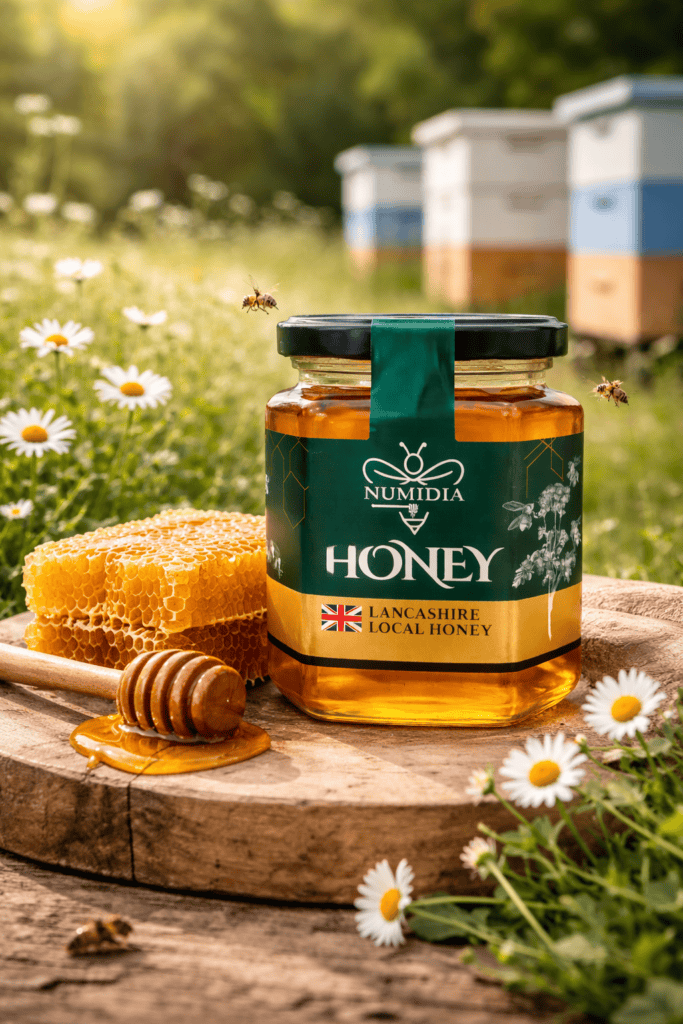
Learn more about our Local Lancashire Honey 500g, crafted from pure British nectar:
https://numidiakingdom.co.uk/product/numidia-wildflower-honey-500g/
6. How to Use Local Honey in Your Daily Life
Local honey is versatile and fits into many recipes and wellness routines.
Cooking and Baking
Use it in:
- salad dressings
- marinades for chicken or lamb
- warm drinks
- breakfast oats
- cakes and pastries
Its natural sweetness adds depth that refined sugar cannot match.
In Restaurants
Many UK chefs use local honey to elevate sauces, glazing, and desserts because it delivers a richer and more authentic flavour.
Everyday Uses
Local honey is ideal for:
- soothing warm drinks
- pairing with cheese
- spreading on toast
- adding to yogurt or granola
Its texture and natural aroma bring a sense of craft and authenticity to simple meals.
7. How to Know You Are Buying Real Local Honey
Because authentic local Pure honey has become more popular, some products may be labelled in a way that is confusing. To make sure you’re buying genuine local honey, look for:
- the name of the beekeeper or apiary
- the region or county (e.g., Lancashire)
- raw or unprocessed statements
- a natural crystallisation pattern
- seasonal batch variations
Industrial honey looks the same every time. Local honey varies, which is a sign of authenticity.
8. Where to Buy Local Honey
You can buy local honey from farm shops, markets, small independent retailers, or directly from beekeepers. Many producers, such as Numidia Kingdom in Lancashire, offer raw and unfiltered honey crafted using sustainable methods.
Supporting regional honey producers helps maintain beekeeping traditions and keeps the market strong.
9. Conclusion: Why Local Honey Should Be in Every UK Home
Local honey is more than a natural sweetener. It is a product that reflects the land, the flowers, and the people who dedicate themselves to beekeeping. Its purity, flavour, and freshness make it superior to mass-produced alternatives. It also supports the environment, rural communities, and the health of bees.
Whether you use it in cooking, wellness, or simply enjoy it on toast, choosing local honey ensures that you experience the true taste of nature.
Discover our 28g Mini Local Honey Jars, ideal for restaurants and hotels:
https://numidiakingdom.co.uk/product/numidia-honey-28g-mini-jar/
Internal Links (you will add on your website):
- Numidia Wildflower Honey 500g
- Numidia Honey Vinegar 250ml
- About Us – Numidia Kingdom
- Our Beekeeping Story
External Links (SEO-safe):
- https://www.bbka.org.uk
- https://www.soilassociation.org
- https://www.nhs.uk/live-well/eat-well/
- https://www.nationalbeeunit.com
- https://www.gov.uk/food-labelling
- https://www.fwi.co.uk
