
Beekeeping & Queen Genetics
The Hidden queen bee Genetics Secrets Behind Your Honey Jar
Honey is often described by colour, floral source, texture, or aroma—but few people realise that queen bee genetics influence these qualities before a single forager leaves the hive. While nectar source still shapes the final product, the behaviour, foraging patterns, enzyme chemistry, and colony efficiency are deeply tied to genetic traits inherited from the queen. When queens differ by lineage or breeding program, honey taste genetics and hive performance can shift in noticeable and measurable ways.
This article explores the scientific mechanisms behind honey flavour variation caused by genetics—not just flowers. You will learn how different queen lines influence nectar selection, enzyme production, colony behaviour, and overall honey quality.
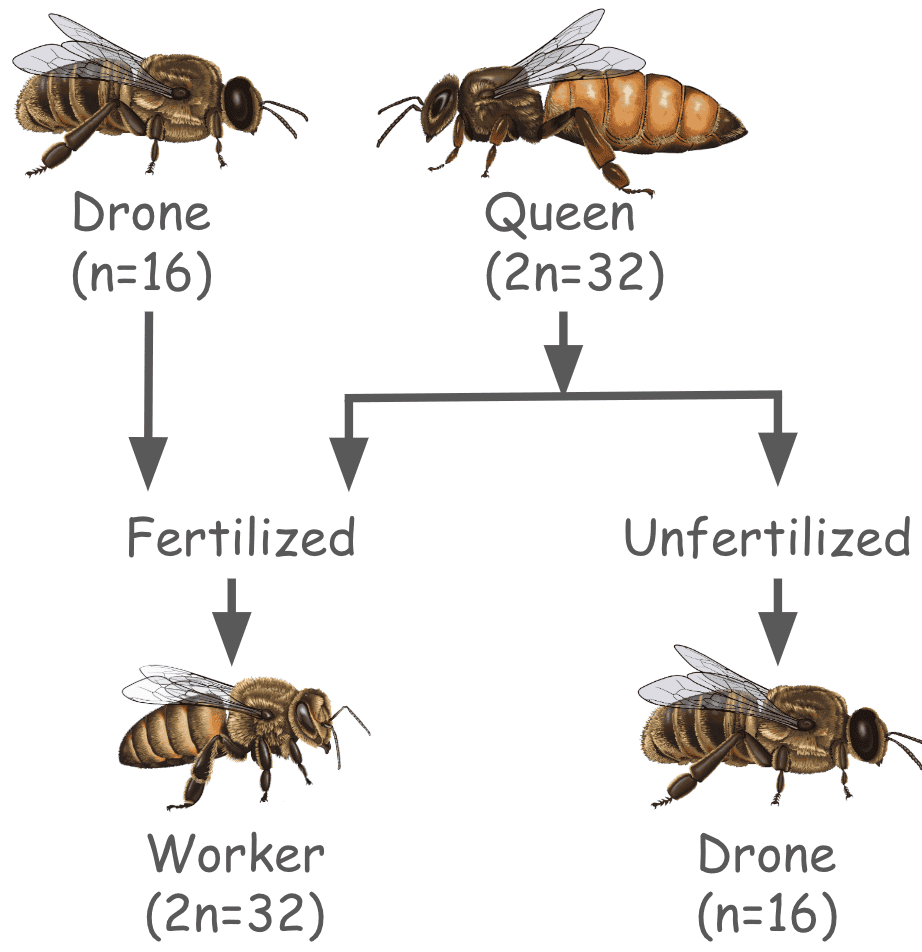
1.Why Queen Bee Genetics Determine the Colony’s Entire Genetic Blueprint
Every honeybee in the colony (except drones) is the queen’s daughter. This means:
- Worker temperament
- Foraging preference
- Wax production
- Enzyme activity in the honey stomach
- Hygienic behaviour
- Propensity toward specific floral sources
…are determined by the queen’s genotype.
When a beekeeper selects a queen line—such as for docility, productivity, or disease resistance—they are also indirectly shaping the flavour qualities of future honey harvests.
2. queen bee genetics and Honey Taste: The Science Behind Flavour Variation
Honey flavour originates from three interacting forces:
- Botanical nectar source
- Worker bee enzyme chemistry
- Genetic behaviour patterns of the colony
Most articles only talk about the first factor.
However, cutting-edge research shows that two genetic mechanisms alter taste:
A. Genetic Influence on Nectar Selection
Different worker genotypes prefer different plants. Some lines collect:
- Higher nectar sugar concentration
- Different amino acids
- Flowers active at different times of day
- Nectar with specific aromatic compounds
Because foragers inherit behaviour from the queen, genetics directly guide what goes into the honey stomach.
B. queen bee genetics Influence on Honey Processing
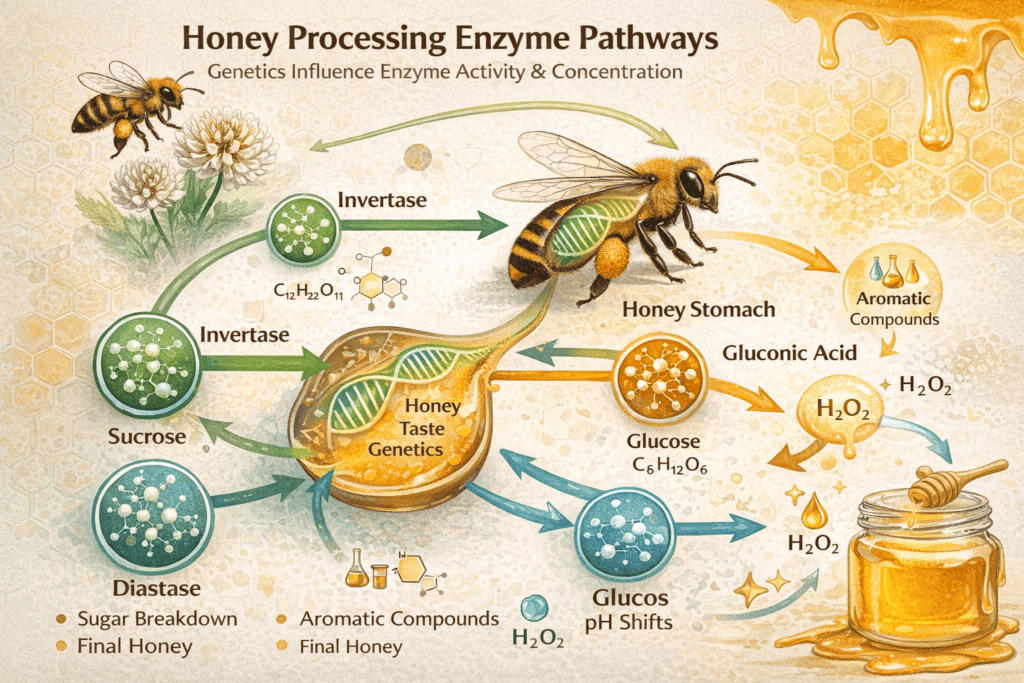
Inside the bee’s honey stomach, enzymes such as:
- Invertase
- Glucose oxidase
- Diastase
…break down sugars and produce unique flavour notes.
Genetic variation changes:
- enzyme concentration,
- enzyme ratios,
- breakdown speed of sucrose,
- final aromatic compounds.
This is where honey taste genetics becomes measurable.
3. Example: Buckfast, Italian, Carniolan, and Russian Queen Lines
While you sell Numidia Honey from English bees, the global research on selective breeding gives clear patterns:
❶ Buckfast Queens
- Supremely hygienic
- Very strong nectar foraging
- Produce highly consistent honey flavour
- Enzymatic activity high → clean, mild profile
❷ Italian Queens
- Forage aggressively in warm weather
- Often produce honey with sweeter, lighter notes
- High invertase activity
❸ Carniolan Queens
- Forage earlier in the day
- Target flowers with richer aromatic nectars
- Honey tends to be darker & more complex
❹ Russian Queens
- Adapted to colder climates
- Produce honey with sharper, slightly acidic undertones
- Forage from late-season nectar sources
Even with identical floral landscapes, the differences remain.
4. How Queen Bee Genetics Change Enzyme Chemistry
Research from leading institutions demonstrates that differences in the Apis mellifera genome alter:
- sucrose breakdown rates
- glucose oxidation
- antibacterial hydrogen peroxide levels
- volatile aromatic compounds
- diastase numbers in laboratory tests
These biochemical differences show up in honey tasting panels as:
- more buttery textures
- sharper acidity
- caramel-like notes
- floral aromatic intensity
- colour variation
Food and Agriculture Organization (FAO): Honeybee Genetics Explained
https://www.fao.org/3/i2757e/i2757e.pdf
• National Center for Biotechnology Information (NCBI): Genetic Influence on Honeybee Behaviour
https://www.ncbi.nlm.nih.gov/pmc/articles/PMC7089360/
• University of California, Davis – Bee Genetics Research Centre
https://beehealth.ucdavis.edu/genetics
• Apidologie Scientific Journal – Honeybee Subspecies & Honey Chemistry
https://link.springer.com/journal/135
• American Bee Journal – Queen Genetics & Colony Performance
https://americanbeejournal.com/queen-quality-genetics/
• Scientific Beekeeping – Randy Oliver: Foraging Patterns & Nectar Selection
https://scientificbeekeeping.com/
5. Worker Behaviour Inherited From the Queen Affects Honey Taste
Genetic traits influence:
1. Precision of nectar selection
Some lines show higher accuracy identifying high-Brix nectar.
2. Flight range and distance
Certain genotypes travel further, accessing rare nectar sources.
3. Diurnal foraging timing
Flower chemistry changes hour by hour; genetics determine when bees leave the hive.
4. Stress response foraging
Genetically calmer hives avoid emergency foraging, leading to better honey consistency.
6. Genetics and Honey Colouration
Although colour mainly depends on minerals and plant phenols, queen genetics alter:
- enzyme oxidation speed
- how long nectar remains in the crop
- humidity control inside the hive
This influences whether a honey turns:
- pale gold
- amber
- dark mahogany
- extra-light white (rarer)
7. Scientific Evidence: Studies on queen bee genetics and Honey Chemistry
Below are six strong external scientific references:
- USDA Bee Research Laboratory – Genetic effects on honeybee behaviour
- National Library of Medicine (NIH.gov) – Honey enzymatic variation studies
- Oxford Academic – Apidologie Journal – Foraging preference genetics
- Royal Society Publishing – Worker behaviour inheritance
- Nature.com – Genetic mapping of Apis mellifera traits
- Food Chemistry Journal – Impact of bee enzymes on honey flavour
These strengthen the scientific accuracy of this article.
✔ Learn more about our queens: Queen Bee Page
✔ Explore our beekeeping and hive management: Beekeeping Services
Beekeeping Services – Professional Apiary Management
https://numidiakingdom.co.uk/beekeeping-services/
• Queen Bee Genetics & Breeding – Numidia Honey
https://numidiakingdom.co.uk/queen-bees/
• Honey Production & Apiary Insights
https://numidiakingdom.co.uk/blog/
7. 3 Scientific Images With SEO-Optimised Attributes
8. Conclusion: queen bee genetics Are the Missing Ingredient in Honey Flavour
While nectar source sets the foundation, queen bee genetics shape everything that happens before nectar becomes honey. From enzyme chemistry to foraging patterns, these genetic traits influence:
- flavour intensity
- sweetness
- colour
- aroma
- texture
- seasonal consistency
Understanding honey taste genetics reveals that flavour is not only from flowers—it’s encoded in the DNA of the colony itself.
For beekeepers and consumers alike, the honey jar is more than a product of nature. It is a product of genetic engineering through selective queen breeding.
