
British Honey
British Honey vs Manuka: Which Is Better for Your Health?
Introduction
Honey has been valued for thousands of years for nutrition, preservation, and medicinal use. In modern scientific research and consumer markets, raw honey is increasingly recognised for retaining natural enzymes, antioxidants, and bioactive compounds that may be reduced during heavy processing. In the UK, British honey represents a significant segment of the premium honey market, often compared directly with imported Manuka honey for its quality, purity, and nutritional value.
Today in the UK, two types dominate premium discussions: British raw honey and Manuka honey. Consumers often ask:
- Is Manuka honey superior?
- Why is it significantly more expensive?
- Is it worth buying in the UK?
- Is British honey just “ordinary” honey?
- Are some Manuka products fake?
This article provides a scientific, economic, and practical comparison to clarify the truth.
High-quality British honey, such as Numidia Wildflower Honey
https://numidiakingdom.co.uk/product/numidia-wildflower-honey-500g/
is produced in Lancashire using controlled extraction methods that preserve moisture balance and enzymatic activity.
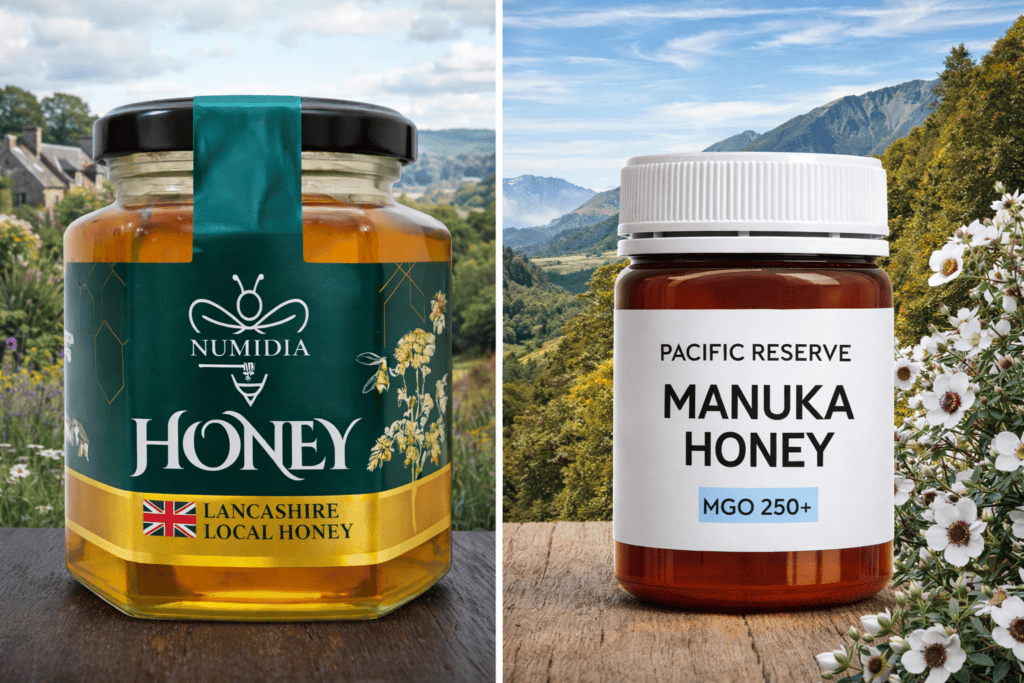
British Honey – Floral Diversity and Nutritional Complexity
British raw honey is typically polyfloral, meaning bees collect nectar from multiple UK plants including:
- Clover
- Bramble
- Lime blossom
- Oilseed rape
- Heather
- Wild meadow flowers
This floral diversity contributes to a complex phytochemical profile.
Unlike single-origin honeys, British honey reflects regional biodiversity, climate, and seasonal forage variation.
According to the National Bee Unit (https://www.nationalbeeunit.com/), UK honey production varies annually depending on weather conditions and nectar flow.
British Honey and Raw Honey Integrity
When sold as raw honey, British honey:
- Is not heavily pasteurised
- Retains glucose oxidase enzyme activity
- Maintains natural pollen content
- Preserves hydrogen peroxide production capacity
The enzymatic function of glucose oxidase plays a key role in antibacterial properties (see overview: https://www.sciencedirect.com/topics/agricultural-and-biological-sciences/glucose-oxidase).
Consumers seeking authentic raw honey should prioritise transparent British honey producers who maintain low-temperature extraction and careful storage conditions.
Manuka Honey – A Specialised Monofloral Product
Manuka honey is derived from nectar of Leptospermum scoparium, native to New Zealand and parts of Australia.
Its unique antibacterial profile is attributed to methylglyoxal (MGO).
Scientific literature has documented the antimicrobial effects of methylglyoxal in Manuka honey (see research: https://www.ncbi.nlm.nih.gov/pmc/articles/PMC6613335/).
Unlike most honeys that rely mainly on hydrogen peroxide activity, Manuka honey demonstrates non-peroxide antibacterial properties.
Why Manuka Honey Is Expensive
Manuka honey commands premium pricing because:
- Limited flowering window (4–6 weeks annually)
- Remote harvesting regions
- Laboratory certification (UMF / MGO grading)
- High global demand
- Strict export controls
However, global sales often exceed estimated production volumes, raising concerns about authenticity in international markets.
Buyers should always verify certification.
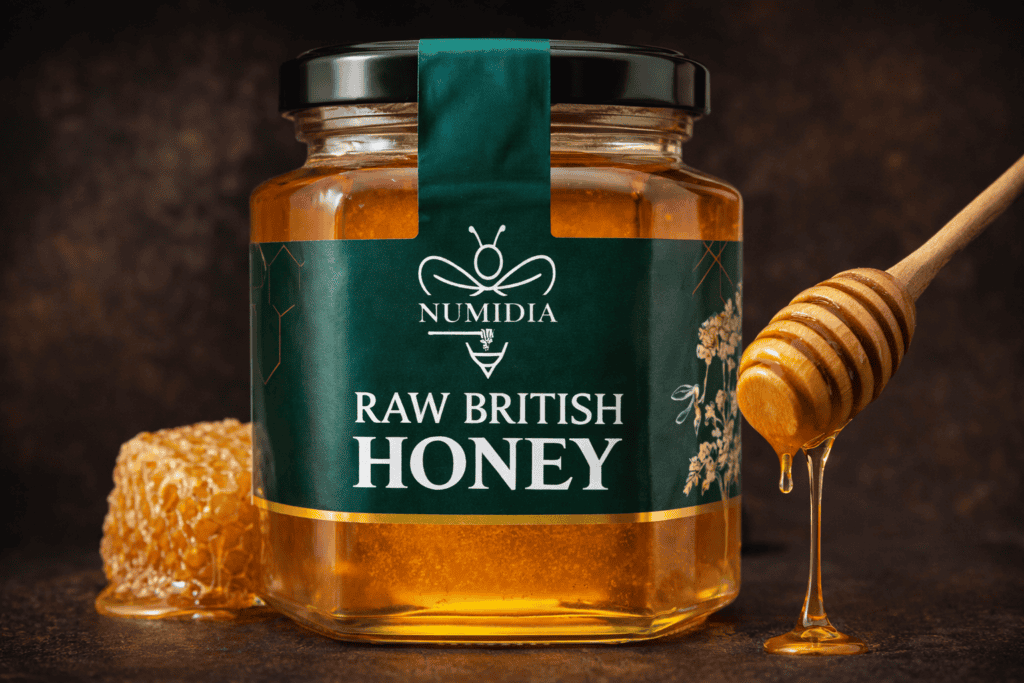
British Honey vs Manuka Honey – Scientific Comparison
| Feature | British Honey | Manuka Honey |
|---|---|---|
| Floral Source | Multi-floral UK forage | Manuka shrub |
| Antibacterial Mechanism | Hydrogen peroxide (enzymatic) | Methylglyoxal (MGO) |
| Taste | Floral, balanced | Earthy, medicinal |
| Daily Use | Excellent | Limited (cost factor) |
| UK Price | £8–£18 / 500g | £30–£80+ / 250g |
| Standardised Rating | No formal grading | UMF / MGO certified |
Health Benefits – Evidence-Based Perspective
Multiple peer-reviewed studies confirm honey’s broad-spectrum antimicrobial activity (review: https://www.ncbi.nlm.nih.gov/pmc/articles/PMC3609166/).
British Honey Benefits
- Natural energy source
- Antioxidant support
- Throat soothing
- Daily nutritional value
- Broad phytochemical diversity
Polyfloral honey provides a wide spectrum of plant-derived compounds, contributing to overall nutritional complexity.
Manuka Honey Benefits
- High targeted antibacterial activity
- Potential wound-healing support
- Gastrointestinal support (limited evidence)
- Oral health applications
However, for everyday consumption, clinical superiority over high-quality raw honey is less dramatic than marketing often suggests.
Raw Honey vs Processed Honey
The term raw honey refers to honey that:
- Has not been heavily heated
- Is not ultra-filtered
- Retains enzymatic activity
- Maintains natural pollen
Both British honey and Manuka honey can be raw — but supermarket versions are often pasteurised.
Consumers should always check processing transparency.
Sustainability and Environmental Considerations
Supporting British honey producers strengthens:
- Local pollination systems
- Regional biodiversity
- Agricultural sustainability
- Reduced carbon footprint compared to imports
Choosing local honey supports UK ecosystems and beekeeping infrastructure.
Economic Comparison in the UK
Estimated 2026 pricing:
- Premium British honey: £12–£18 per 500g
- Manuka MGO 250+: £35–£50 per 250g
Per gram, Manuka honey may cost 4–6 times more.
For daily use, British honey provides stronger economic value.
Which Honey Should You Buy in the UK?
Choose British Honey If:
- You want daily nutritional use
- You prefer local sourcing
- You value sustainability
- You seek cost efficiency
- You want authentic raw honey
Choose Manuka Honey If:
- You need targeted antibacterial support
- You require certified MGO grading
- You are using it short-term therapeutically
For most UK households, high-quality British honey offers better long-term value.r use.
Conclusion
Both products are genuine honey.
Manuka honey is chemically distinctive and clinically researched for specific applications. However, it is often heavily marketed and significantly more expensive.
British honey, particularly when sold as raw honey, provides nutritional diversity, sustainability benefits, and practical affordability.
For everyday health and culinary use in the UK, premium British honey remains a scientifically sound and economically rational choice.
