
Uncategorized
Expert Queen Bee Types in Britain and Their Beehive Traits
Honey bees are at the heart of Great Britain’s beekeeping heritage. From the traditional British Black Bee to modern favourites like Buckfast, Carniolan, and Italian lines, each type has a unique queen bee, distinct beehive behaviour, temperament, honey-gathering strength, and adaptation to Britain’s climate.
This article explores the main honey-bee types kept across the UK, compares their queen bee genetics, beehive performance, colony behaviour, and overall productivity. It also provides a clear comparison of how much honey each beehive type typically produces per year.
Queen Bee Genetics in Great Britain: Understanding Local Variations
The queen bee is the foundation of every beehive. Her genetics determine:
- Hive temperament
- Swarming behaviour
- Honey production
- Disease resistance
- Overwintering strength
- Colony growth rate
The UK’s climate—cool spring, damp summers, and variable nectar flow—means beekeepers select bees not only for honey but also for stability, calmness, and survival.
British Honey Bee Types Compared (Queen Bee Focus + Beehive Productivity)
Below are the four main honey-bee types kept across Great Britain:
- British Black Bee (Apis mellifera mellifera)
- Buckfast Bee
- Carniolan Bee (Apis mellifera carnica)
- Italian Bee (Apis mellifera ligustica)
Let’s analyse them one by one in detail.
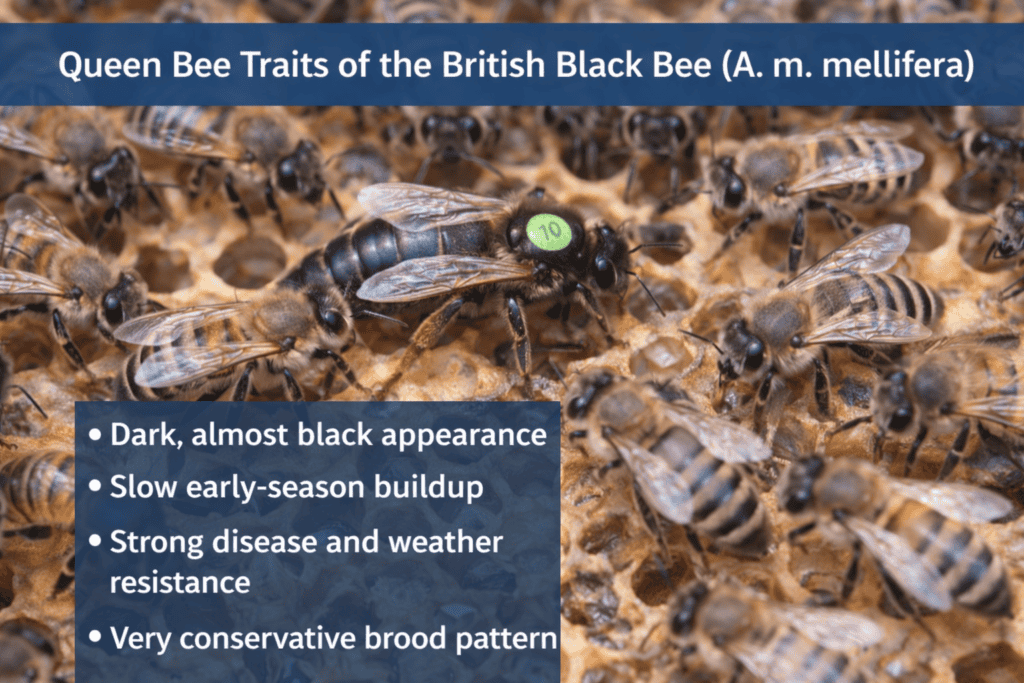
Queen Bee Traits of the British Black Bee (A. m. mellifera)
About the Subspecies
The British Black Bee is considered the UK’s native honey bee and is highly adapted to British conditions. Historically widespread, it nearly disappeared due to the Isle of Wight disease in the early 1900s, but dedicated breeding programs restored it.
Queen Bee Characteristics
- Dark, almost black appearance
- Slow early-season buildup, ideal for cold springs
- Strong disease and weather resistance
- Very conservative brood pattern (avoids over-expanding)
- Low drifting between colonies
Beehive Behaviour
- Excellent overwintering
- Forages in poor weather more than other types
- Moderate temperament (sometimes defensive if not selectively bred)
Honey Production
- Average annual yield: 25–40 lb (11–18 kg)
- Best in areas with heather, clover, and moorland flows
Strengths
- Best survival rate in harsh winters
- Excellent for wild and remote UK areas
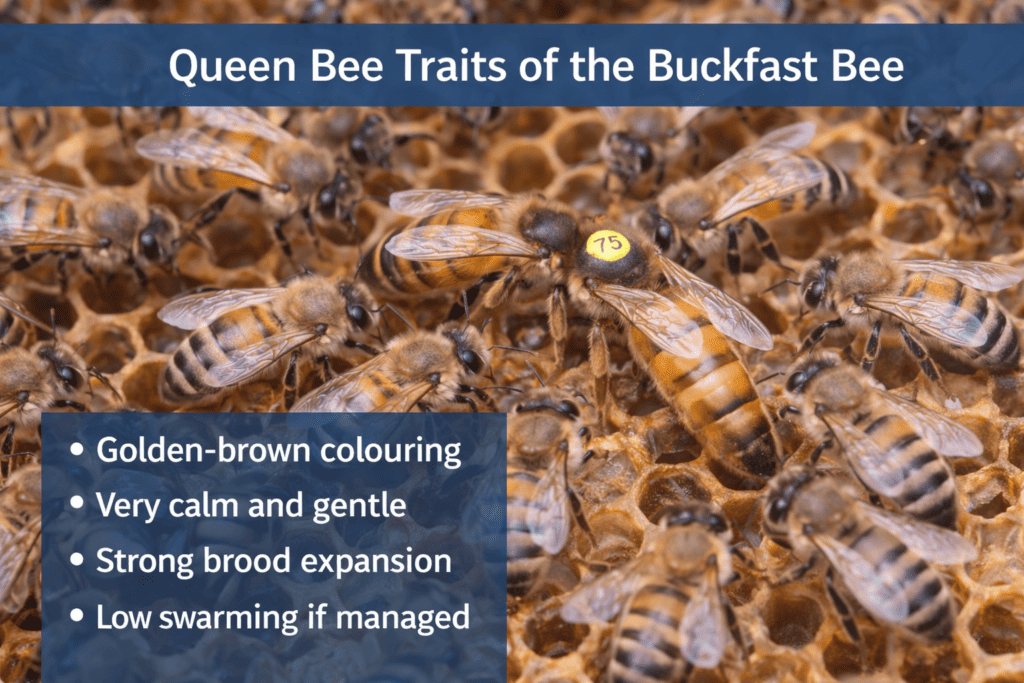
Queen Bee Traits of the Buckfast Bee
About the Subspecies
Developed by Brother Adam at Buckfast Abbey, this bee is one of the most reliable choices for UK beekeepers due to its hybrid breeding program.
Queen Bee Characteristics
- Golden-brown striping
- Very calm and gentle
- Strong brood expansion
- Low swarming tendency
- High hygienic behaviour (varroa resistance improving)
Beehive Behaviour
- Rapid spring growth
- Excellent comb-building
- Strong nectar collection in varied weather
Honey Production
- Average annual yield: 45–80 lb (20–36 kg)
- Some commercial apiaries report 100+ lb in strong nectar flows
Strengths
- Best all-round bee for beginners and professionals
- High honey yield in most UK regions
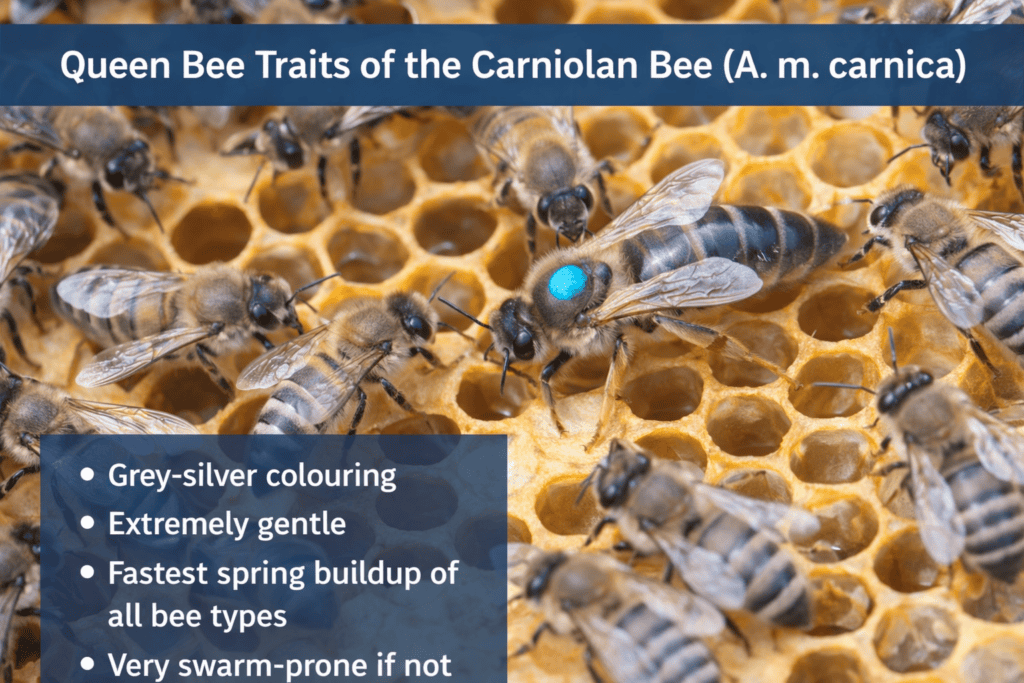
Queen Bee Traits of the Carniolan Bee (A. m. carnica)
About the Subspecies
Originates from Slovenia and surrounding regions. Very popular with UK hobbyist beekeepers due to gentle nature.
Queen Bee Characteristics
- Grey-silver colouring
- Extremely gentle
- Fastest spring buildup of all bee types
- Very swarm-prone if not managed
Beehive Behaviour
- Forages early in the day
- Highly adaptable
- Perfect for beginners (calm bees)
Honey Production
- Average annual yield: 40–70 lb (18–32 kg)
Strengths
- Best bee for urban gardens and gentle inspections
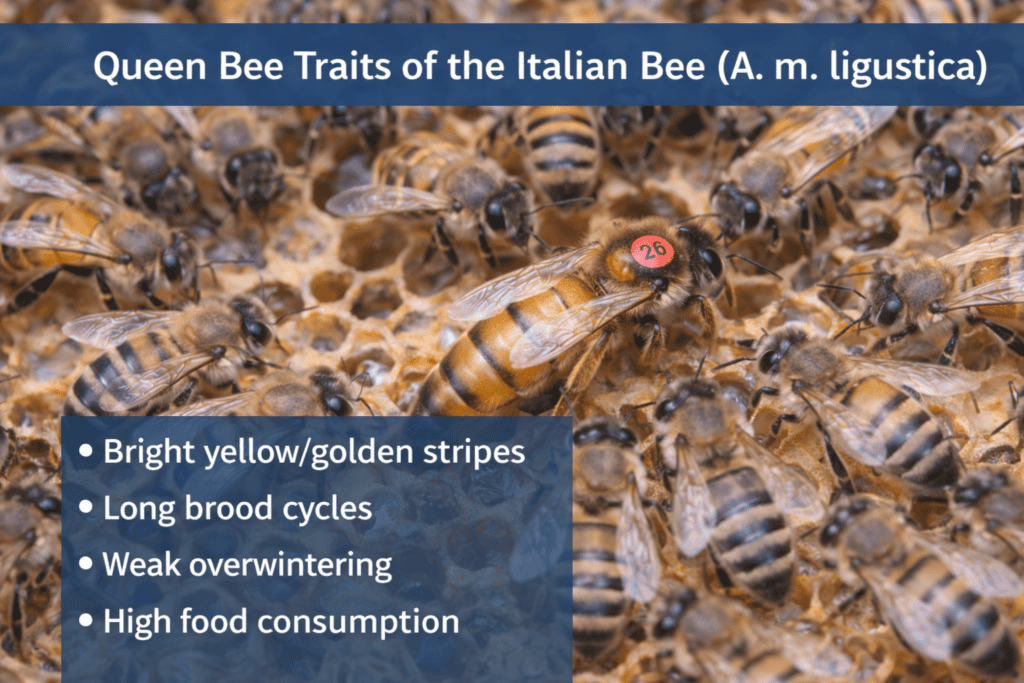
Queen Bee Traits of the Italian Bee (A. m. ligustica)
About the Subspecies
The world’s most popular honey-bee type, but not perfectly suited to the UK climate.
Queen Bee Characteristics
- Bright yellow/golden stripes
- Long brood cycles
- Very calm temperament
- Weak overwintering in long UK winters
- High food consumption
Beehive Behaviour
- Expands brood even when nectar is low → risk of starvation
- Excellent honey production in warm summers
- Best in southern England
Honey Production
- Average annual yield: 40–75 lb (18–34 kg) (good summers)
Strengths
- Excellent for spring/summer honey in warm areas
Table Comparison: Queen Bee Differences & Honey Output
| Bee Type | Queen Bee Traits | Temperament | Honey Yield | Climate Adaptation |
|---|---|---|---|---|
| British Black Bee | Dark, slow spring start, conservative brood | Medium | 25–40 lb | Excellent cold/wet |
| Buckfast | Hybrid genetics, calm, strong brood | Very gentle | 45–80 lb | Excellent all-round |
| Carniolan | Grey queen, rapid growth | Extremely gentle | 40–70 lb | Good but swarm-prone |
| Italian | Golden queen, long-season brood | Gentle | 40–75 lb | Best in warm regions |
Beehive Strength & Survival: Why British Beekeepers Choose Different Bees
UK beekeepers often select bees based on:
- Local climate
- Nectar availability
- Forage periods
- Colony temperament
- Apiary density
- Swarm management preference
- Winter survival rate
No single bee is “best,” but Buckfast and Carniolan dominate beginner and commercial setups, while conservationists favour the British Black Bee.
Queen Bee Breeding Programs in the UK
Major UK breeding initiatives:
- British Black Bee restoration projects
- BIBBA (Bee Improvement and Bee Breeders’ Association)
- Regional queen rearing groups in Wales, Scotland, and Devon
These programs focus on:
- Varroa resistance
- Hygienic behaviour
- Temperament
- Local adaptation
External research links (copy/paste):
Environmental Challenges for UK Beehives & Honey Yields
Key pressures include:
- Varroa destructor
- Small hive beetle (threat but not yet established)
- Wet summers
- Agricultural monocultures
- Pesticide exposure
- Climate instability
These influence how well each queen’s genetics performs in UK beehives.
Final Comparison: Which Queen Bee Produces the Most Honey in the UK?
Best for high honey production:
🥇 Buckfast Bee
🥈 Italian Bee
🥉 Carniolan Bee
4️⃣ British Black Bee (lowest honey yield, but highest survival)
Best for UK winter survival:
🥇 British Black Bee
🥈 Buckfast
🥉 Carniolan
4️⃣ Italian Bee
Best for beginners:
🥇 Carniolan
🥈 Buckfast
- https://numidiakingdom.co.uk/why-british-honey-is-naturally-runny-a-scientific-explanation/
- https://numidiakingdom.co.uk/uk-raw-honey-is-the-market-better-after-brexit/
- https://numidiakingdom.co.uk/the-truth-about-british-honey-prices-across-the-uk/
