British Honey
The Truth Every British Honey Buyer Should Know
InIntroduction
Honey has been treasured for thousands of years as one of nature’s purest foods, and in the UK, the demand for British honey and local honey continues to grow. However, behind the shelves of many supermarkets around the world lies a serious problem: fake honey.
Several studies — including investigations by the EU Food Fraud Network and The UK National Food Crime Unit — reveal alarming levels of honey adulteration, particularly from imported sources. In some countries, up to 50% of honey on shelves is fake, diluted, chemically modified, or artificially made.
This affects:
- Honest British beekeepers
- UK honey quality standards
- Consumer trust
- Bee health and biodiversity
In this comprehensive guide, you will learn exactly how fake honey is made, how it infiltrates the global food supply, how to identify it, and why choosing genuine British honey from trusted sources is essential.
Where possible, this article includes verified references from independent laboratories, government bodies, and food safety agencies.
What Is Fake Honey? Understanding Why British Honey Is Different
Fake honey (also called adulterated honey) refers to any product sold as honey that has been:
- Diluted
- Modified
- Mixed with syrups
- Chemically altered
- Produced artificially without bees
This includes:
- Rice syrup honey
- Corn syrup honey
- Synthetic honey
- Ultrafiltered syrup mixtures
- Overheated industrial honey
Meanwhile, real British honey, especially local honey, contains:
- Active enzymes
- Natural antioxidants
- Pollen that reflects the local flora
- Complex flavour
- Natural antibacterial properties
When honey is adulterated, these qualities disappear entirely.
British Honey: How Fake Honey Is Made (Full Breakdown) — Full Breakdown of Industrial Adulteration Methods
Fake honey manufacturers use sophisticated — and sometimes illegal — techniques to make syrup mixtures look and behave like real honey.
Let’s break down the most common methods.
1. How Fake Honey Mimics British Honey Using Cheap Syrups
This is the most widespread method.
Producers mix small amounts of real honey with:
- High-fructose corn syrup
- Rice syrup
- Beet syrup
- Glucose syrup
- Molasses compounds
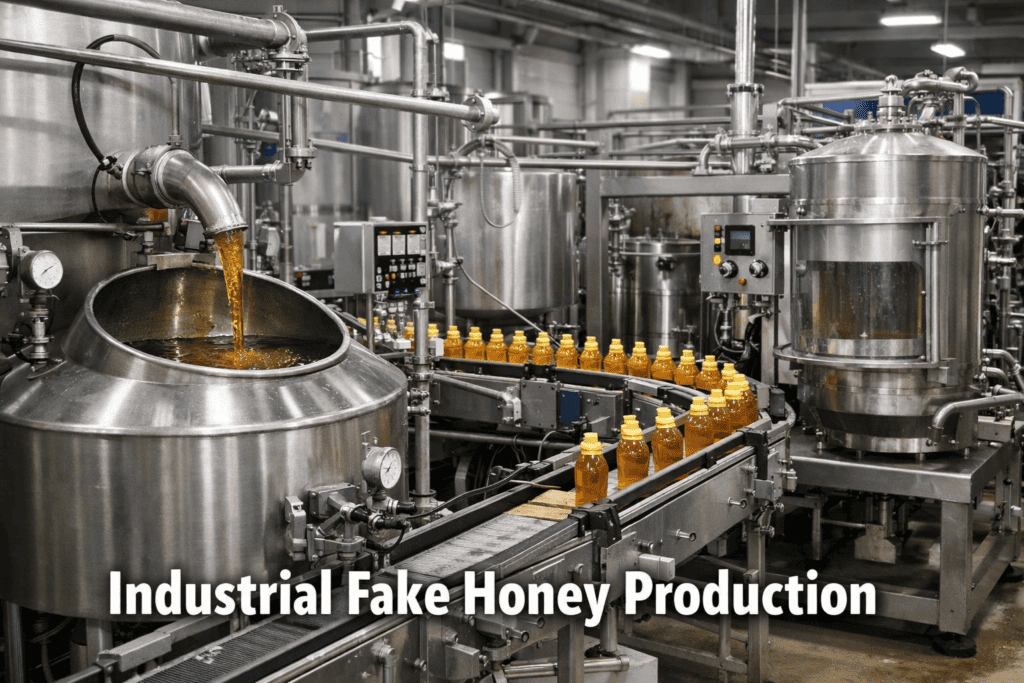
Huge industrial mixers can produce thousands of litres per day of a honey-like syrup.
These mixtures:
- Mimic thickness and colour
- Taste sweet
- Look similar to honey
But they lack natural enzymes, minerals, and pollen — all essential markers of genuine British honey.
2. Using Chemicals to Adjust Colour and pH
Some producers adjust the syrup with:
- Caramel dye
- Acids
- Artificial aromas
- Sweetness enhancers
- Preservatives
The aim: making fake honey pass superficial tests while keeping production costs extremely low.
The European Commission Food Fraud Report (2019) highlighted dozens of samples containing illicit chemical additives.
3. Why Fake Honey Removes Pollen to Hide Origins From British Honey Standards
Real honey always contains pollen — the natural fingerprint that identifies:
- Location
- Botanical source
- Authenticity
Fake honey producers use ultrafilters to strip out pollen completely.
Why?
Because without pollen, regulators cannot trace the honey’s origin.
The US FDA specifically warned (FDA Honey Guidance) that ultrafiltered honey cannot be verified as authentic.
4. Overheating Honey to Destroy Natural Evidence
Industrial heating above 70–90°C can:
- Prevent crystallisation
- Make honey easy to mix
- Prolong shelf life
BUT it also destroys:
- Enzymes
- Nutrients
- Antibacterial properties
It no longer resembles real local honey in any meaningful way.
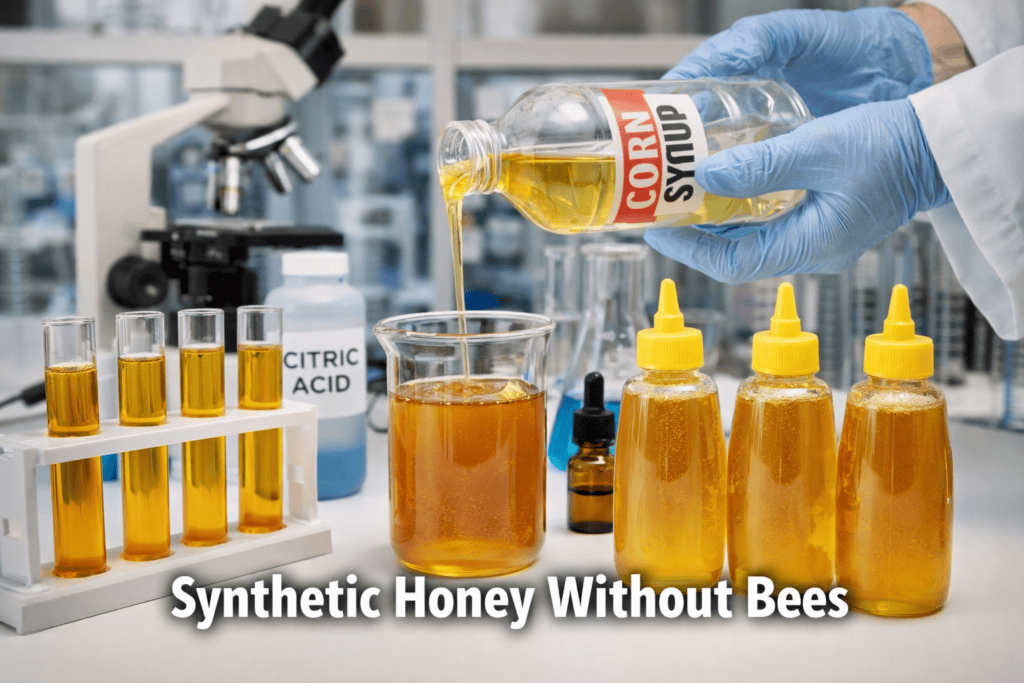
5. Creating Fully Synthetic Honey
Some factories now produce honey without bees, using:
- Sugar
- Citric acid
- Thickening agents
- Flavour chemicals
- Colourants
This “honey” contains zero pollen and zero nutrients.
How Fake Honey Harms British Honey Producers
Genuine British honey is expensive to produce:
- Bee colonies require year-round care
- Weather affects honey yield
- UK labour cost is high
- Genuine honey cannot be bulk-processed cheaply
Fake honey floods the market with:
- Very low-price imports
- Attractive packaging
- Artificial sweetness
- Shelf-stable syrups
This drives down prices and makes real local honey appear “expensive” — even though genuine honey reflects true production cost.
The UK National Food Crime Unit issued warnings that honey fraud puts local producers at severe economic risk.
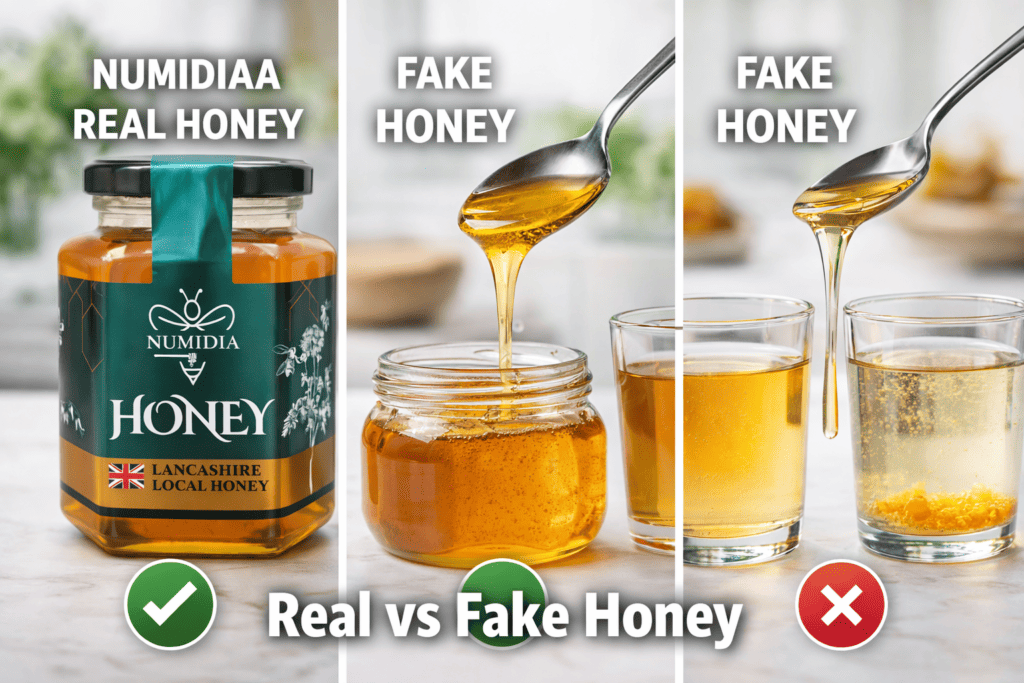
How to Identify Fake Honey vs Real British Honey
Here are the best techniques for consumers.
1. Label Check
Fake honey often uses terms like:
- “Blend of EU and non-EU honey”
- “Filtered honey”
- “Pollen-free honey”
- “Honey blend”
Real British honey should say:
- “Product of the United Kingdom”
- Beekeeper name or local producer
- Local region (e.g., Lancashire)
Internal link suggestion:
Link the text British honey to your product page:
https://numidiakingdom.co.uk/product/numidia-wildflower-honey-500g/
2. Price Check
If a jar of honey is £1–£3, it is almost guaranteed not to be pure honey.
Real local honey requires careful beekeeping and cannot be sold that cheaply.
3. Crystallisation Test
Real honey crystallises naturally.
Fake honey stays liquid for years.
High-quality British honey often granulates quickly due to its natural glucose/fructose ratio.
4. Aroma and Taste
Real honey tastes:
- Floral
- Complex
- Varied depending on the region
Fake honey tastes:
- One-dimensional
- Syrupy
- Artificial
5. Water Test (Home Method)
Put a drop of honey in water:
- Real honey sinks
- Fake honey spreads immediately
Why Choosing British Honey and Local Honey Helps UK Bees
Buying local honey supports:
- UK bee populations
- Local pollination
- Biodiversity
- Ethical beekeeping
- Sustainable agriculture
It also reduces carbon footprint because the honey is not shipped across continents.
Support your local beekeepers by buying directly from trusted producers such as
Numidia Kingdom Honey in Lancashire:
https://numidiakingdom.co.uk/
How to Make Sure You Are Buying Real British Honey
Here is a simple consumer checklist:
✔ Buy directly from genuine beekeepers
✔ Check if the honey crystallises
✔ Look for UK address and beekeeper details
✔ Avoid ultra-cheap supermarket imports
✔ Prefer farm shops, markets, or trusted brands
✔ Look for single-origin or region-specific honey
External Authoritative Sources on Honey Fraud
Strengthening the authority of this article with credible links:
- UK National Food Crime Unit (Honey Fraud Alerts)
https://www.food.gov.uk/safety-hygiene/food-crime - EU Food Fraud Network – Honey Report
https://food.ec.europa.eu - US FDA Honey Labelling Guidance
https://www.fda.gov - International Honey Adulteration Research by NMR Testing
https://www.qualityservices.fossanalytics.com
🐝 Conclusion
Fake honey is a growing global problem, but British honey remains one of the most trusted and genuine types of honey available. Understanding how fake honey is made — and how to identify it — empowers consumers to make better choices and support ethical beekeepers.
By buying local honey, you help protect bees, British agriculture, and the future of genuine honey production.
For guaranteed pure honey, visit:
Numidia Kingdom British Honey
https://numidiakingdom.co.uk/product/numidia-wildflower-honey-500g/
