
Uncategorized
How to Use Honey Vinegar Uk for Health & Cooking
Interest in Honey Vinegar UK has increased significantly as more consumers look for natural, minimally processed alternatives to artificial condiments and synthetic wellness products. At the same time, growing awareness of Honey Vinegar Benefits has led health-conscious individuals to explore fermented honey-based products for digestion, metabolic balance, and culinary versatility. But what exactly is honey vinegar, how is it made, and what does scientific evidence say about its potential health applications?
This professional guide explains the fermentation process, nutritional profile, safety considerations, scientific research, and practical uses of honey vinegar within the UK market.
What Is Honey Vinegar UK?
Honey Vinegar UK refers to vinegar produced through the natural fermentation of honey rather than apples, grapes, or grains. It follows a traditional two-stage fermentation method:
- Alcoholic fermentation (honey sugars → ethanol)
- Acetic fermentation (ethanol → acetic acid)
Unlike distilled vinegar, honey vinegar is made using biological fermentation involving natural yeasts and acetic acid bacteria.
According to UK regulations under the Food Safety Act and associated food standards:
https://www.food.gov.uk
Vinegar must contain a defined minimum acetic acid level (commonly around 4%) to be legally classified as vinegar.
High-quality honey vinegar should contain:
- Natural acetic acid
- No synthetic acid additions
- No artificial colouring
- No added refined sugar
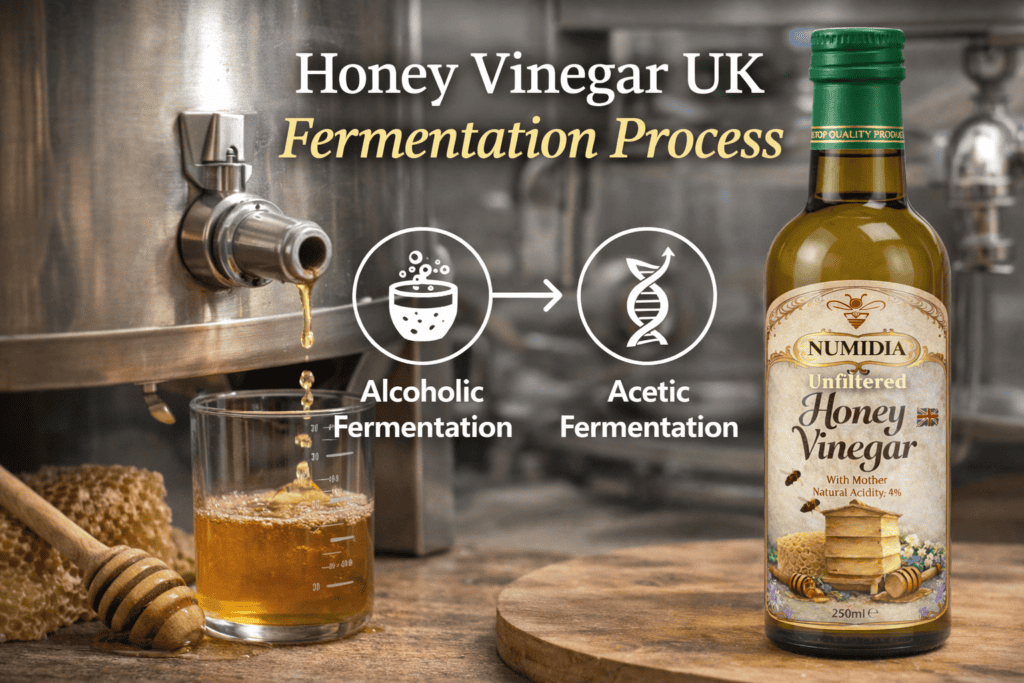
Honey Vinegar UK Fermentation Process Explained
The quality of Honey Vinegar UK depends largely on controlled fermentation.
Stage 1: Alcoholic Fermentation
Natural yeast converts honey sugars (glucose and fructose) into ethanol.
Stage 2: Acetic Fermentation
Acetobacter bacteria oxidise ethanol into acetic acid in the presence of oxygen.
Scientific reviews confirm that acetic fermentation produces organic acids associated with digestive and metabolic support:
https://www.ncbi.nlm.nih.gov/pmc/articles/PMC1785201/
Slow fermentation enhances:
- Flavour complexity
- Aromatic profile
- Stability of organic compounds
Industrial rapid fermentation may reduce flavour depth.
Honey Vinegar Benefits: Evidence from Scientific Research
Honey Vinegar Benefits for Blood Sugar Regulation
Research suggests that vinegar consumption may influence glycaemic response.
A study published in the Journal of Agricultural and Food Chemistry indicates that acetic acid may help reduce postprandial blood glucose spikes:
https://pubs.acs.org
Mechanisms may include:
- Delayed gastric emptying
- Improved insulin sensitivity
- Reduced starch digestion rate
It is important to note that vinegar is not a medical treatment but may complement balanced dietary patterns.
Honey Vinegar Benefits for Digestive Support
Acetic acid can stimulate digestive enzyme secretion and may promote improved gastric function.
According to research reviewed in the National Library of Medicine:
https://www.ncbi.nlm.nih.gov
Moderate vinegar intake may:
- Support stomach acidity balance
- Improve nutrient breakdown
- Aid digestive efficiency
Always dilute vinegar before consumption.
Honey Vinegar Benefits and Antioxidant Potential
Honey naturally contains phenolic compounds and flavonoids. During fermentation, some of these compounds may remain in trace quantities.
Studies examining fermented food products confirm antioxidant activity in various vinegar types.
The Food and Agriculture Organization (FAO) outlines quality standards and composition expectations:
https://www.fao.org/fao-who-codexalimentarius/en/
Quality depends on:
- Original honey source
- Fermentation method
- Storage conditions

Honey Vinegar UK vs Apple Cider Vinegar
Many UK consumers compare Honey Vinegar UK to apple cider vinegar (ACV).
| Feature | Honey Vinegar UK | Apple Cider Vinegar |
|---|---|---|
| Base | Honey | Apples |
| Flavour | Floral, smooth | Sharp, fruity |
| Sweet undertones | Subtle | Minimal |
| Culinary balance | Mild acidity | Stronger acidity |
Honey vinegar typically offers:
- Softer mouthfeel
- More rounded acidity
- Greater compatibility with delicate dishes
Honey Vinegar UK in Daily Health Routines
Morning Dilution Method
Mix:
- 1 tablespoon honey vinegar
- 250ml warm water
- Optional lemon
Drink before meals if tolerated.
The NHS advises caution with acidic beverages and dental enamel exposure:
https://www.nhs.uk
Rinse mouth after consumption.
Honey Vinegar UK Before Meals
Some studies suggest vinegar may enhance satiety.
Small clinical trials indicate possible appetite regulation effects, although findings remain moderate and variable.
Moderation is essential.
Honey Vinegar UK for Cooking Applications
Salad Dressings
Combine:
- Honey vinegar
- Olive oil
- Wholegrain mustard
- Fresh herbs
Enhances flavour without overwhelming acidity.
Marinades and Tenderisation
Acidity helps:
- Break down protein fibres
- Enhance flavour penetration
Suitable for:
- Poultry
- Lamb
- Roasted vegetables
Glazes and Reductions
Reduced honey vinegar creates:
- Balanced sweet-acid glaze
- Complex flavour profile
Ideal for:
- Roasted carrots
- Duck
- Grilled vegetables
Honey Vinegar Benefits for Gut Health
Fermented foods are widely studied for microbiome support.
While filtered honey vinegar may not contain live bacteria, acetic acid influences gut environment.
A review in Frontiers in Microbiology discusses fermented foods and microbial balance:
https://www.frontiersin.org
Honey vinegar should be viewed as a complementary dietary addition.
Honey Vinegar UK and Weight Management
Some research suggests vinegar consumption may contribute to:
- Improved satiety
- Reduced caloric intake
- Better glycaemic control
However, long-term weight management requires:
- Balanced diet
- Physical activity
- Sustainable habits
Vinegar alone is not a solution.
Safety Considerations for Honey Vinegar UK
To use safely:
- Always dilute
- Avoid excessive daily intake
- Consult healthcare provider if managing chronic conditions
- Store in cool, dark location
High acidity can:
- Irritate throat
- Damage enamel
- Cause gastric discomfort if undiluted
Choosing High-Quality Honey Vinegar UK
Look for:
- Transparent ingredient list
- Clear acidity percentage
- No synthetic additives
- Glass bottle packaging
- UK-based production
Explore premium British-made honey vinegar here:
Honey Vinegar 250ml:
https://numidiakingdom.co.uk/product/numidia-honey-vinegar-250ml/
Honey Vinegar educational articles:
https://numidiakingdom.co.uk/category/honey-vinegar/

Sustainability and Honey Vinegar UK Production
Supporting local honey vinegar production supports:
- British beekeeping
- Pollination services
- Agricultural biodiversity
The UK National Pollinator Strategy highlights the ecological role of bees:
https://www.gov.uk/government/publications/national-pollinator-strategy-for-bees-and-other-pollinators-in-england
Honey-based products contribute indirectly to sustainable ecosystems.
Regulatory and Quality Standards in the UK
Honey and vinegar products must comply with:
- UK Food Standards Agency regulations
- Labelling transparency requirements
- Hygiene and HACCP controls
Producers must ensure:
- Traceability
- Accurate acidity measurement
- Safe fermentation practices
Quality assurance strengthens consumer trust.
