Raw Honey
The Truth About Raw Honey: Why Some Companies Heat It
Why Raw Honey Gets Heated: The Real Reasons Behind the Industry Practice
Raw honey is one of the purest foods on Earth — untouched, unheated, nutrient-rich, and filled with natural enzymes. Yet despite these powerful qualities, many large companies choose to heat raw honey before selling it. This process transforms genuine raw honey into pasteurised honey, a commercial product that looks cleaner and clearer but loses much of its natural value.
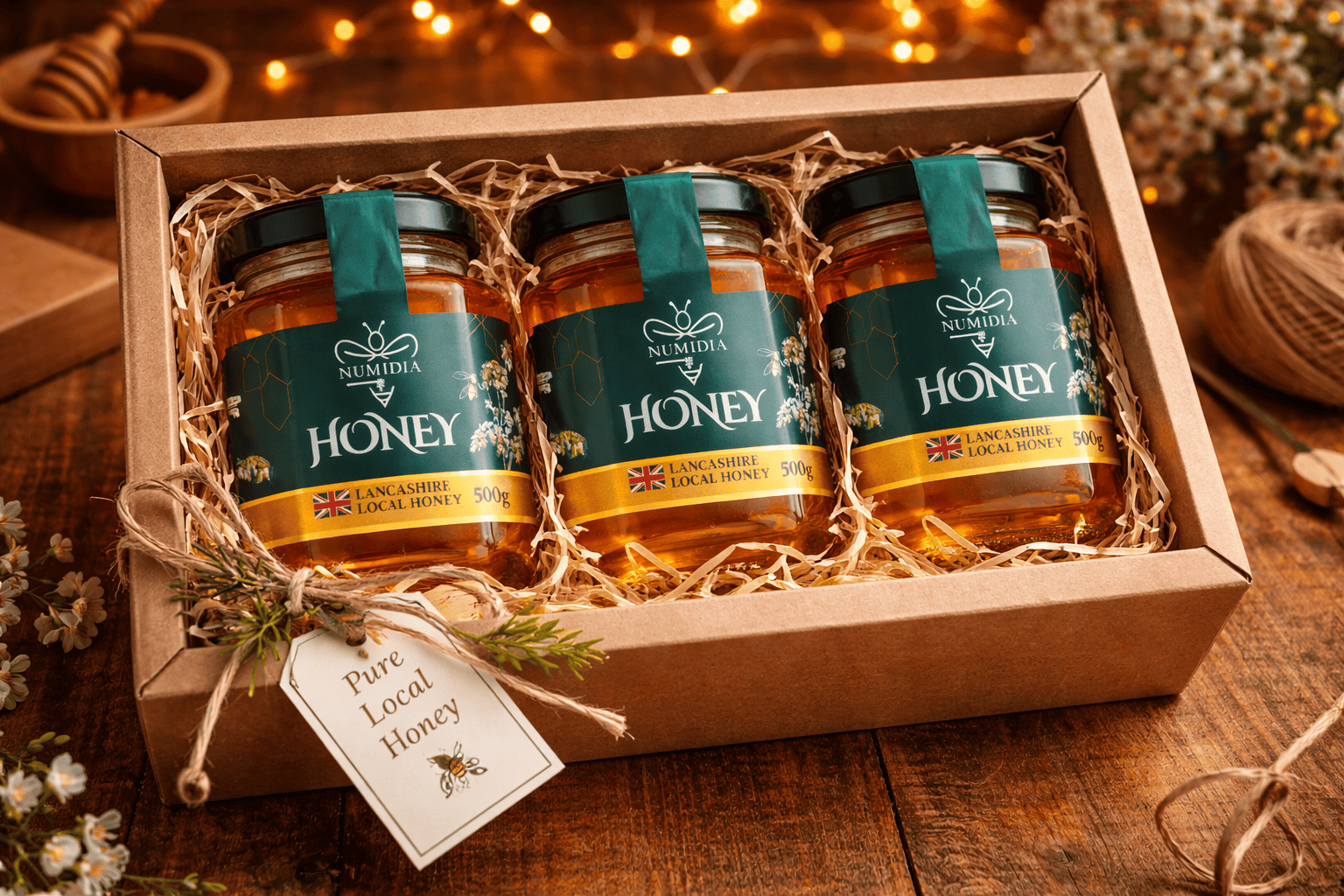
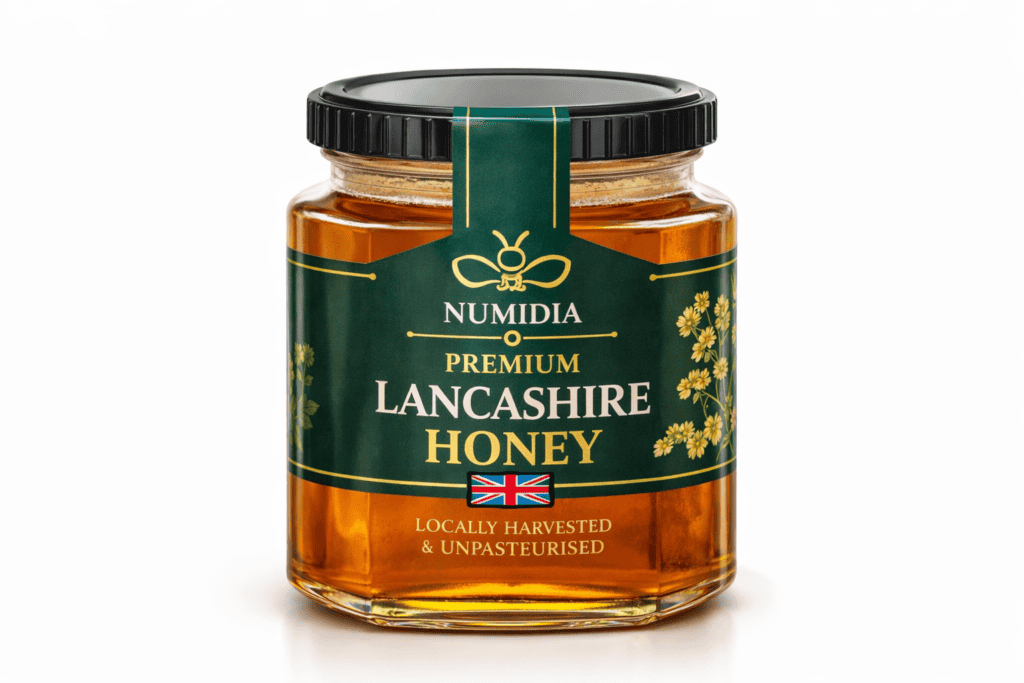
At Numidia Kingdom, we proudly offer unpasteurised, cold-extracted honey harvested from well-managed British hives. But to understand why pure honey is becoming harder to find on supermarket shelves, we must explore the industrial reasons behind heating and pasteurising.
This article reveals exactly why companies heat pure honey, the benefits, disadvantages, and how it impacts flavour, nutrition, authenticity, and transparency.
What Raw Honey Really Is (And Why People Love It)
Raw local honey is honey that has not been heated above natural hive temperatures. It retains:
- active enzymes
- antioxidants
- pollen
- vitamins
- minerals
- natural aroma
- antibacterial properties
It also crystallises naturally — which is a GOOD sign of purity.
But mass-production companies often see raw honey as “inconvenient.” Why? Let’s break down the reasons.
Why Companies Turn Raw Honey into Pasteurised Honey
While raw local honey is nutritionally superior, many large honey manufacturers choose to sell pasteurised honey, which has been heated, filtered, and processed. Their reasons are largely commercial, logistical, and cosmetic — not nutritional.
Here are the main industry reasons for heating honey.
1. Appearance: To Keep Raw Honey Permanently Clear
Consumers often don’t understand crystallisation. When raw honey becomes cloudy or thick, people think it has gone off — even though crystallisation is a natural sign of quality.
To avoid customer complaints, companies heat honey so it stays:
- clear
- smooth
- liquid
- visually “perfect”
But this comes at the cost of nutrients.
2. Speed: Heated Raw Honey Is Easier to Bottle at Scale
Industrial honey bottling machines prefer hot, fast-flowing honey.
Heating reduces viscosity, which means:
- quicker bottling
- fewer machine blockages
- lower production cost
- increased volume per minute
Efficiency is prioritised over nutrition.
3. Blending: Heat Makes It Easier to Mix Imported Honey
One of the biggest secrets of the honey industry:
Pasteurisation makes it easier to conceal blended, low-quality honey imports.
Heating honey:
- masks flavour differences
- dissolves small crystals
- removes natural aroma
- creates a uniform look
This helps large companies mix honey from multiple countries without customers noticing.
4. Shelf Life: Raw Honey Crystallises, Heated Honey Does Not
Supermarkets want honey to stay liquid for months. Crystallised honey reduces sales, so companies heat it to delay crystallisation.
5. Filtration: Heat Allows Ultra-Fine Filtering
Ultra-filtering removes:
- pollen
- propolis
- natural wax
- micro-crystals
This gives a clean, supermarket-friendly appearance — but it removes key nutrients.
Benefits of Heating Raw Honey (From an Industrial Perspective Only)
To be fully balanced, it is important to recognise the reasons why companies defend pasteurisation. These benefits are from the manufacturer’s viewpoint, not the consumer’s.
1. Fewer Customer Complaints
Customers often return raw honey when it crystallises.
2. Smooth & Perfect Appearance
Heated honey looks “ideal” for retail shelves.
3. Longer Shelf Stability
Heating delays crystallisation, helping supermarkets avoid expired-looking stock.
4. Easier Mass Production
Hot honey flows faster through industrial pipes and fillers.
Disadvantages of Heating Raw Honey (From the Consumer’s View)
The disadvantages are significant — both nutritionally and ethically.
1. Loss of Natural Enzymes
Heating destroys key enzymes:
- diastase
- invertase
- amylase
These enzymes provide honey’s natural antibacterial strength.
External link (NHS):
🔗 https://www.nhs.uk/conditions/honey-for-coughs/
2. Loss of Pollen (Less Effective for Hay Fever)
Raw honey contains pollen grains that help many people with seasonal allergies.
Pasteurised honey often contains zero pollen.
External link (British Beekeepers Association):
🔗 https://www.bbka.org.uk/
3. Lower Nutritional Value
Heating destroys antioxidants, vitamins, and flavour compounds.
External link (PubMed):
🔗 https://pubmed.ncbi.nlm.nih.gov/
4. Higher Risk of Adulteration
Pasteurisation makes it easier to mix:
- sugar syrup
- corn syrup
- imported honey
- low-quality blends
External link (Food Standards Agency Honey Testing):
🔗 https://www.food.gov.uk
5. Loss of Raw Aroma and Natural Taste
Raw honey has a strong aroma and floral complexity. Heating flattens the flavour.
Why Raw Honey Is Better for Health
Raw honey supports:
✔ immunity
✔ digestion
✔ antibacterial protection
✔ respiratory health
✔ natural energy
External link (National Honey Board Research):
🔗 https://honey.com/
How to Tell If Honey Is Truly Raw
Raw honey has clear signs:
✔ Crystallises naturally
✔ Cloudy or creamy texture
✔ Strong aroma
✔ Local region listed (e.g., Lancashire)
✔ Not labelled “blend of EU & non-EU honey”
✔ Sold by real beekeepers
🔗 https://numidiakingdom.co.uk/product/numidia-wildflower-honey-500g/
- NHS – Honey for Cough Relief
https://www.nhs.uk - Food Standards Agency (UK Honey Guidance)
https://www.food.gov.uk - British Beekeepers Association (BBKA)
https://www.bbka.org.uk - National Honey Board Research
https://honey.com - PubMed – Honey Scientific Papers
https://pubmed.ncbi.nlm.nih.gov - Apimondia – International Federation of Beekeepers
https://www.apimondia.org
⭐ Conclusion
Raw honey is a living, natural food filled with enzymes, antioxidants, and flavour. When honey is heated for mass production, it becomes a processed commodity — convenient for manufacturers but nutritionally weaker for consumers.
Choosing raw, unpasteurised honey from trusted British producers like Numidia Kingdom ensures you receive pure, unaltered honey straight from the hive.
Authenticity matters. Your health will taste the difference.
