
Recipes & Uses, Uncategorized
How Professional Chefs Use Local Honey in Everyday Cooking Dishes
Local honey has become one of the most important natural ingredients in modern UK kitchens. Chefs value its freshness, rich flavour, and natural versatility, especially when working with regional dishes. Unlike blended supermarket honey, local honey offers traceability, seasonal character, and the authentic taste of nearby flowers. This is why many restaurants choose to cook with 500g jars of British Honey while serving guests in elegant 28g mini jars, such as the ones offered by Numidia Kingdom.
To help restaurants and food businesses make the most of British Honey, here are the top ten ways chefs use this ingredient in professional cooking.
Learn more about regulations and production standards in our completeo British Honey UK report
1. Marinades for Meat and Poultry
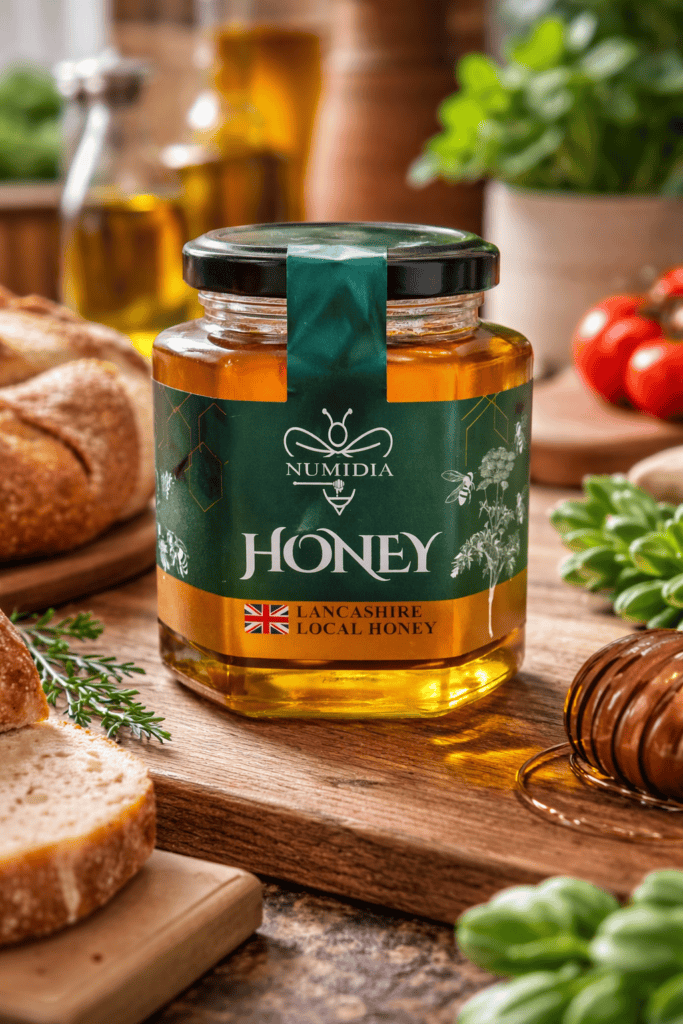
Local honey brings natural sweetness and caramelisation to marinades. Chefs mix it with lemon juice, soy sauce, garlic, and herbs to create glazes that coat lamb, chicken, or duck. The unique flavour of Lancashire honey gives dishes a regional identity.
Many restaurants order 500g Local Lancashire British Honey because it’s the ideal size for professional kitchen prep.
Internal link:
https://numidiakingdom.co.uk/product/numidia-wildflower-honey-500g/
Using local honey for marinades also reduces reliance on processed sugars and enhances browning during roasting.
For ingredient authenticity, chefs often refer to the British Beekeepers Association for guidance on the value of raw honey:
External link: https://www.bbka.org.uk
2. Salad Dressings with a Premium Finish
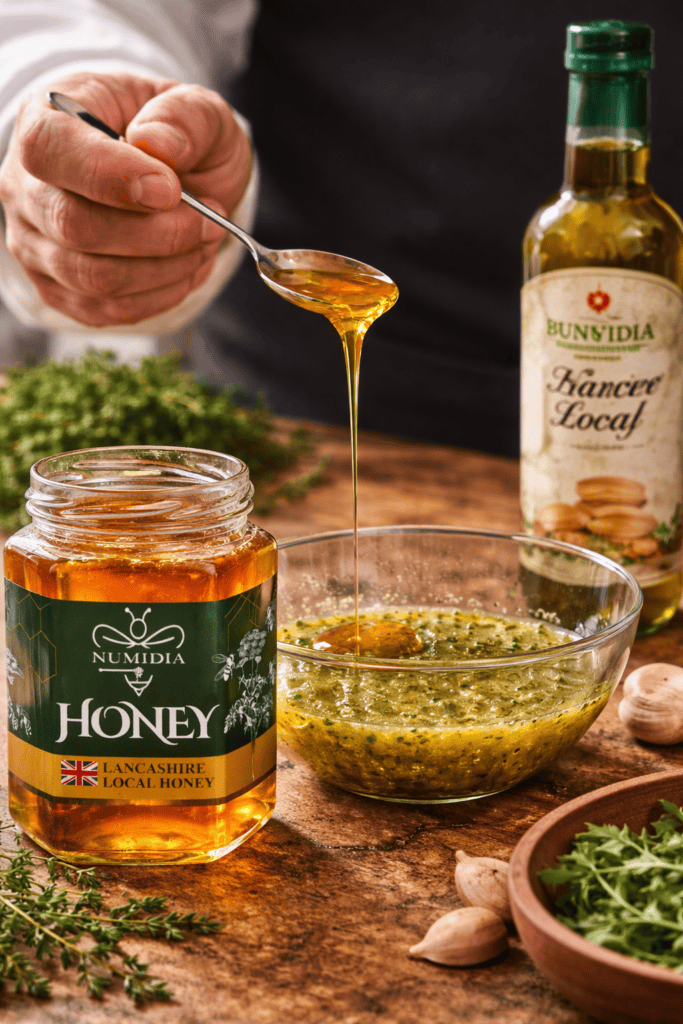
Chefs love using local honey in vinaigrettes because it blends smoothly with oil and vinegar. A simple dressing of honey, Dijon mustard, extra virgin olive oil, and citrus juice transforms any salad.
Many restaurants combine dressings with Numidia’s Honey Vinegar 250ml, which pairs naturally with honey notes.
Internal link:
https://numidiakingdom.co.uk/product/numidia-honey-vinegar-250ml/
Using local honey elevates even simple salads, giving them a natural sweetness that comes from nearby wildflowers.
3. Glazes for Roasting and Grilling
Restaurants use local honey to create shiny, flavour-packed glazes for vegetables, seafood, and meats. When heated, honey caramelises beautifully and provides a crisp, savoury-sweet coating.
Chefs often brush the glaze during the final minutes of cooking to avoid burning. This technique works exceptionally well with salmon, parsnips, carrots, and chicken wings.
For information about heat stability in natural foods and cooking safety, chefs sometimes check the NHS live-well guidance:
External link: https://www.nhs.uk/live-well/eat-well/
4. Desserts and Pastries
Local honey is a favourite ingredient in fine-dining desserts. Chefs use it in crème brûlée, cheesecakes, baklava, panna cotta, and fruit-based desserts. Because local honey is raw and aromatic, it enhances the natural flavours of desserts without overpowering them.
To ensure traceability and authenticity, restaurants value local producers such as Numidia Kingdom, who provide unfiltered honey produced in Lancashire’s countryside.
Internal link:
https://numidiakingdom.co.uk/about-us/
5. Cheese Boards and Charcuterie Plates
One of the most popular uses for local honey in restaurants is pairing it with cheese. The contrast between salty, creamy, or aged cheeses and sweet honey creates an unforgettable flavour balance.
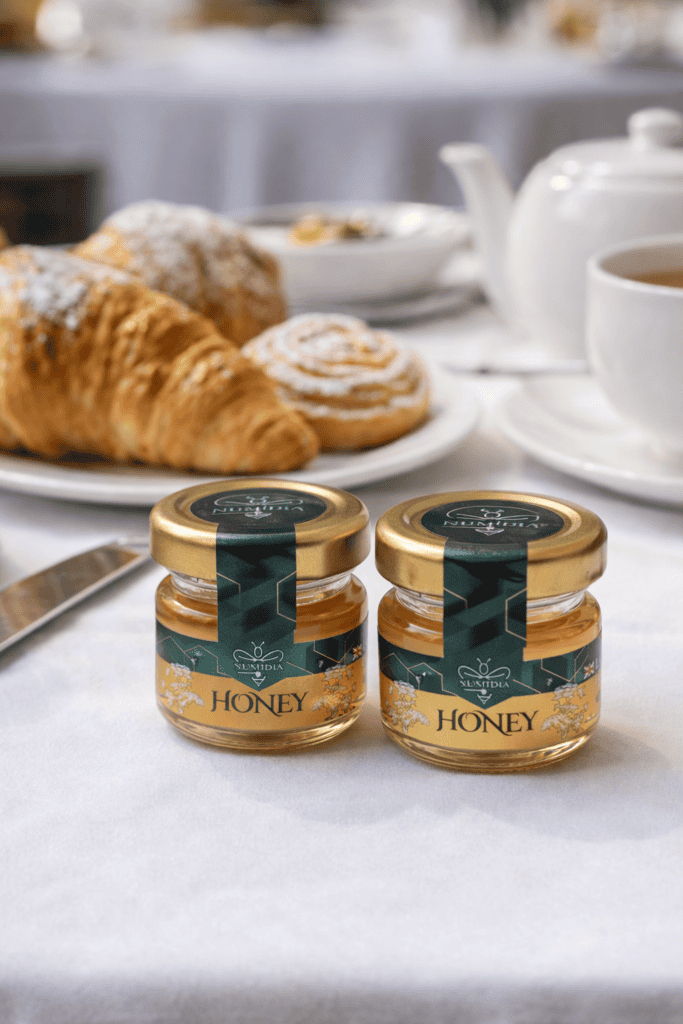
For serving tables, most restaurants prefer Numidia 28g Mini Honey Jars, as they provide perfect single-portion control with a premium appearance.
Internal link:
https://numidiakingdom.co.uk/product/numidia-honey-28g-mini-jar/
These small jars add elegance to cheese boards and reduce waste, making them ideal for hotels and afternoon tea service.
6. Natural Sweetener for Drinks
Chefs and bar teams use local honey to sweeten cocktails, herbal teas, and mocktails. Drinks like honey mojitos, hot toddies, and fresh mint tea greatly benefit from raw honey’s natural enzymes and unique aroma.
Local honey dissolves well in warm liquids and offers a smoother sweetness compared to refined sugar.
The Soil Association provides information on organic standards and natural ingredients used in food and drink:
External link: https://www.soilassociation.org
7. Local Honey Breakfast Dishes and Bakery Items
Restaurants and cafés use local honey in granola bowls, oatmeal, pancakes, waffles, and pastries. A spoonful of honey drizzled over fresh fruit or yogurt enhances breakfast dishes with natural sweetness.
Many venues place 28g jars directly on breakfast trays, as they look premium and hygienic. This elevates the guest experience and reinforces the value of serving local honey rather than generic supermarket blends.
8. Finishing Touch on Gourmet Plates
Local honey is often used as a finishing drizzle on gourmet dishes. Chefs add honey at the final stage to enhance shine, texture, and aroma. This technique is especially common with roasted root vegetables, baked feta, and even pizzas topped with chili flakes.
A small amount of honey can make a plate look polished and well-balanced.
9. Sauces, Reductions, and Local Honey Gastrique
Local honey is valuable for making reductions and French-style gastriques. When simmered with herbs, wine, or vinegar, honey creates a rich, glossy sauce with natural sweetness.
The subtle floral notes of Lancashire honey give sauces depth and character. This is where 500g jars British Honey become essential in professional kitchens, providing chefs with reliable quantity and consistency.
Restaurants often browse the National Bee Unit’s research for insights into bee health and honey authenticity:
External link: https://www.nationalbeeunit.com
10. Health-Focused Dishes and Local Honey Wellness Menus
As diners demand healthier options, chefs look for natural ingredients that replace processed sugars. Local honey fits perfectly into wellness menus because it contains antioxidants and natural enzymes.
Restaurants highlight local honey on their menus to show commitment to sustainability and regional sourcing. This gives guests confidence in the quality and transparency of the food they enjoy.
Internal link to your category page for all honey content:
https://numidiakingdom.co.uk/category/our-apiary/
Why Chefs Choose Local Honey Over Imported Honey
Local honey provides unmatched freshness, traceability, and authenticity. Chefs prefer it because:
- it has higher flavour quality
- it comes from trusted local beekeepers
- it supports UK sustainability goals
- it enhances dishes without artificial additives
Restaurants also appreciate knowing the exact region their honey comes from. This is especially important for premium dining and farm-to-table menus.
Conclusion
British Honey has become an essential ingredient in professional kitchens. Whether used in marinades, desserts, dressings, drinks, or breakfast dishes, it offers chefs unmatched versatility and natural flavour. The combination of 500g jars for cooking and 28g jars for serving allows restaurants to work efficiently while presenting their brand with elegance.
By choosing British Honey, restaurants support regional producers, improve dish quality, and create a more memorable dining experience.
