British Honey
What Makes British Honey Truly Unique?
British honey has a flavour that stands apart from honey produced anywhere else in the world. Its gentle sweetness, floral depth, and clean natural finish make it a favourite among chefs, beekeepers, and honey lovers alike. But what actually makes British local honey so unique?
The answer lies in three powerful factors: the British climate, the diversity of local flowers, and the careful way UK beekeepers manage their hives.
This in-depth guide explains exactly why British honey tastes different—and why choosing honey from trusted UK producers makes all the difference.
For a complete breakdown of British honey standards and market trends, read our full guide to British Honey UK.
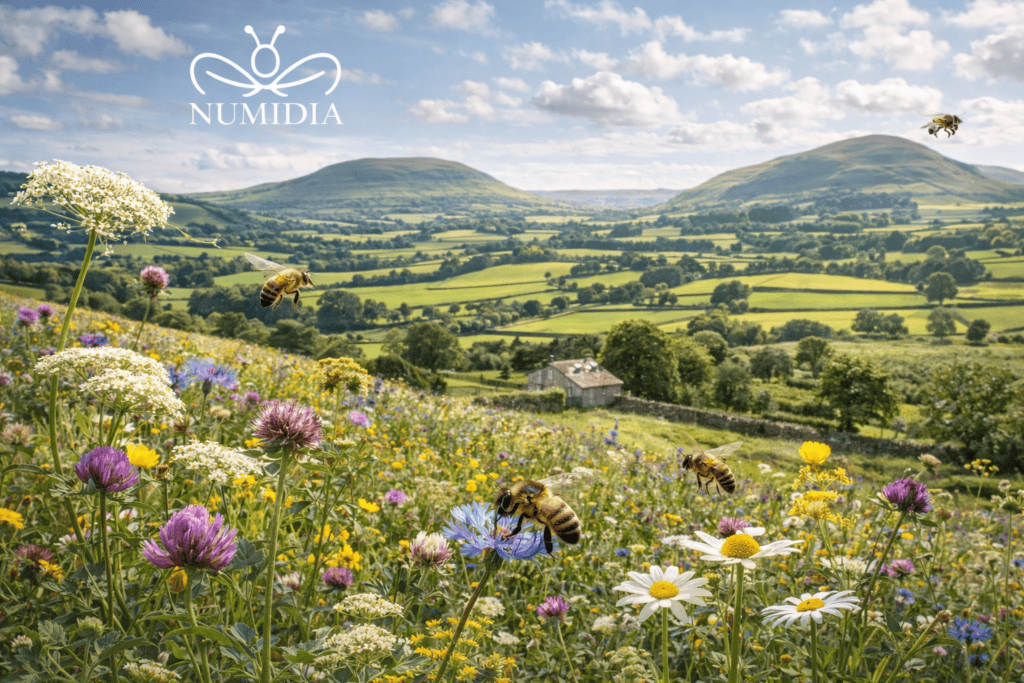
What Makes British Honey Special?
Many people notice that British local honey has a distinct, layered flavour—a balance of sweetness, mild herbs, and floral notes. Unlike many mass-produced international honeys, British local honey is not ultra-filtered, not overheated, and not blended with cheap syrups.
Instead, it reflects the true character of local landscapes and the natural behaviour of bees in the UK’s mild climate.
Climate: How Britain’s Weather Shapes British Honey
The UK climate is unlike warmer honey-producing regions. It’s cooler, wetter, and more variable throughout the year. Surprisingly, this produces honey with richer depth and more complexity.
Cooler Temperatures Create Slower Nectar Flow
British flowers release nectar more slowly than in hotter climates. Bees spend more time collecting from fewer flowers, which results in:
- Stronger concentrations of natural flavours
- More variation from region to region
- A denser texture compared to honey from warmer countries
This slower nectar production also helps create the naturally thicker consistency many buyers associate with high-quality British honey.
A Longer Spring and Summer Season
Because the UK has long, mild seasons, bees continue to forage across many months, transforming nectar from:
- Early spring blossoms
- Wildflower meadows
- Hedgerow plants
- Late-season clover and heather
This gives British honey a layered taste profile that develops throughout the year.
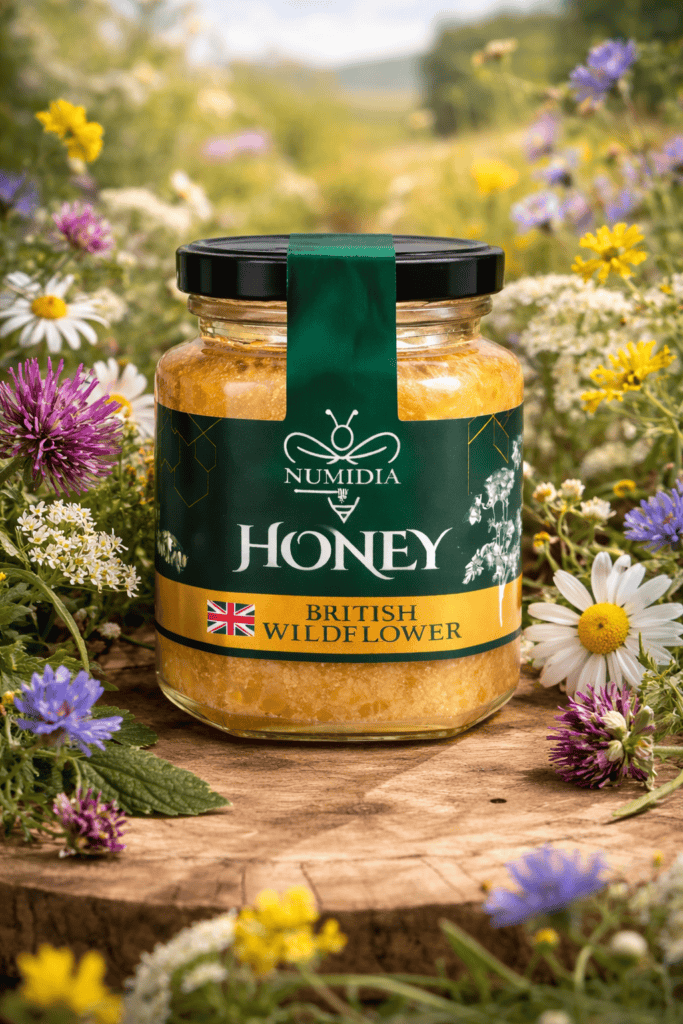
Floral Diversity: Why British Honey Has Exceptional Flavour
One of the most important reasons why British pure honey tastes different is the diversity of wild plants and flowering crops found across the country.
Thousands of Native Flowers Feed UK Bees
In the UK, bees forage from:
- Willow
- Hawthorn
- Clover
- Wild blackberry
- Sycamore
- Lime tree
- Heather moorlands
Each plant adds a different note, from fruity to herbal to caramel-sweet.
This makes British pure honey naturally multi-layered, with a flavour that changes based on season and region.
Britain’s Famous Heather Honey (british honey)
Heather honey is one of the rarest and most valuable honeys in the world. The UK is one of the few countries with large heather moorlands, especially in Scotland and northern England.
Heather honey is known for:
- Thick, jelly-like texture
- Strong floral aroma
- Rich amber colour
- Unique, slightly smoky taste
This alone helps distinguish British honey from honey made elsewhere.
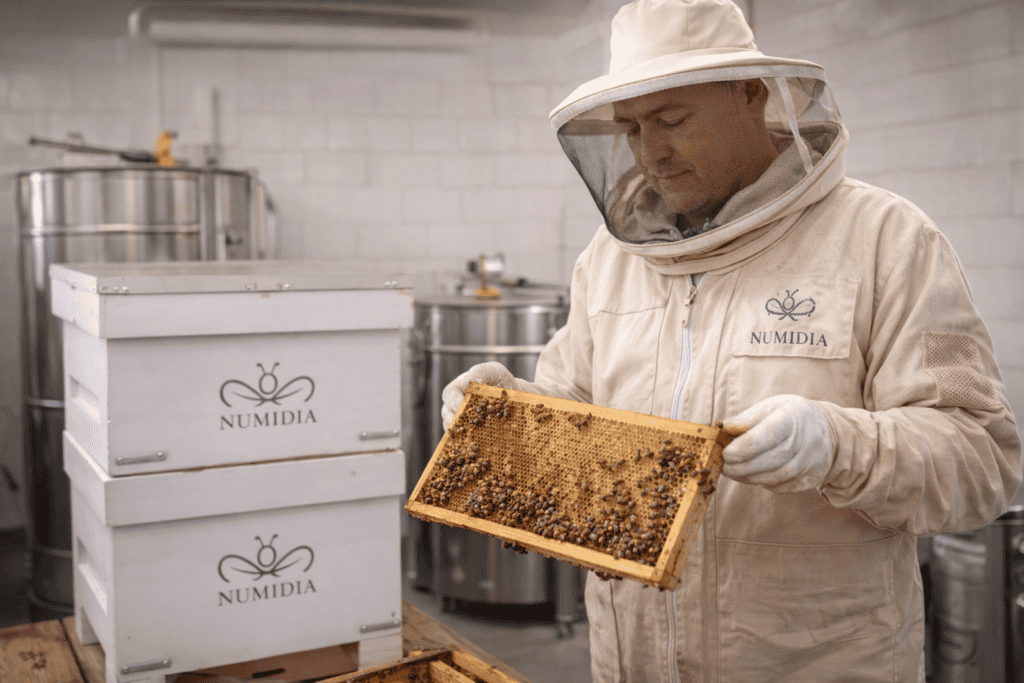
How UK Beekeeping Practices Improve Pure British Honey
British Pure honey also tastes different because UK beekeepers follow traditional methods, strict hygiene standards, and natural harvesting practices.
Minimal Processing
Most British beekeepers—including small producers like Numidia Honey—do NOT:
- Overheat honey
- Ultrafiltrate honey
- Add syrups
- Blend honey from different countries
This helps preserve:
- Enzymes
- Pollen
- Antioxidants
- Aroma compounds
- Nutritional value
The result is authentic honey with true British character.
Focus on Bee Welfare
Healthy bees make higher-quality honey. British beekeepers generally prioritise:
- Clean hives
- Sustainable bee management
- Regular health checks
- Avoiding unnecessary chemical treatments
Good beekeeper care = better honey.
Regional Differences in British Honey Flavour
Just like wine regions, different parts of Britain produce honey with distinct characteristics.
Northern England (including Lancashire)
Honey from Northern England often has:
- Warm floral notes
- Light herbal tones
- Creamy texture
This is where Numidia Honey is produced, reflecting the rich wildflowers of Lancashire.
👉 https://numidiakingdom.co.uk/product/numidia-wildflower-honey-500g/
Southern England
Often lighter, sweeter honey with soft citrus notes from lime trees and clover.
Scottish Heather Regions
Heather honey dominates the flavour—strong, aromatic, and powerful.
Why British Honey Is Rare and Valuable
British honey production is lower than in warmer countries. The climate limits nectar flow and bees produce smaller harvests.
This means:
- Supplies are limited
- Flavour is more precious
- Each jar reflects a specific place and season
People who try authentic, raw British honey notice the difference immediately.
Health Benefits of Unprocessed British Honey
British honey is naturally:
- Rich in antioxidants
- Packed with enzymes
- Full of pollen
- Free from artificial sweeteners
- Known to support immune health
Because it’s minimally processed, it retains benefits that many mass-produced international honeys lose through pasteurisation.
Choosing the Best British Honey: What to Look For
To find truly high-quality British honey, check for:
- “Produced in the UK”
- Raw or minimally filtered
- Single-origin or local
- Harvest date
- No blend of “EU and Non-EU” honey
For trusted quality, choose producers who prioritise transparency, such as Numidia Honey.
👉 https://numidiakingdom.co.uk/
- UK Food Standards Honey Regulations
https://www.gov.uk/food-labelling-and-honey-rules - British Beekeepers Association
https://www.bbka.org.uk - National Honey Monitoring Scheme
https://honey-monitoring.ac.uk - Food Standards Agency – Honey Authenticity
https://www.food.gov.uk - European Honey Quality Guide (EU Commission)
https://food.ec.europa.eu - Codex Standard for Honey
https://www.fao.org
Why Choosing Local British Honey Supports the Environment
Buying local honey helps:
- Protect pollinators
- Support British biodiversity
- Encourage sustainable farming
- Reduce import dependency
Every jar supports not only bees but also the local environment.
Why Numidia Honey Represents Genuine British Honey
Numidia Honey is proudly produced in Lancashire using traditional methods and sustainable beekeeping. It reflects all the qualities that make British honey so unique:
- Pure
- Local
- Raw
- Full-flavoured
- Naturally crystallised
Try our British wildflower honey
Discover our 500g wildflower honey jar
Explore our 28g mini honey jars
Visit our Home page
